


This part of eastern Germany is THE hotspot for innovative tech
Ad
Lusatia – The world's been talking about Silicon Valley and Germany's Silicon Saxony, but Lusatia has quietly become a testing ground for new technology over the past few years. It's now exploded as a hotspot for innovation.
New institutes, public investment in the millions, and international teams are building a research and production landscape that's hard to find anywhere else in Germany. The region is a hub for the future, and has pushed the boundaries in astrophysics, materials science, and semiconductor technology.
Here's a look at some of the exciting projects currently underway in Lusatia, Germany.
What's really behind Lusatia's status as a region of excellence
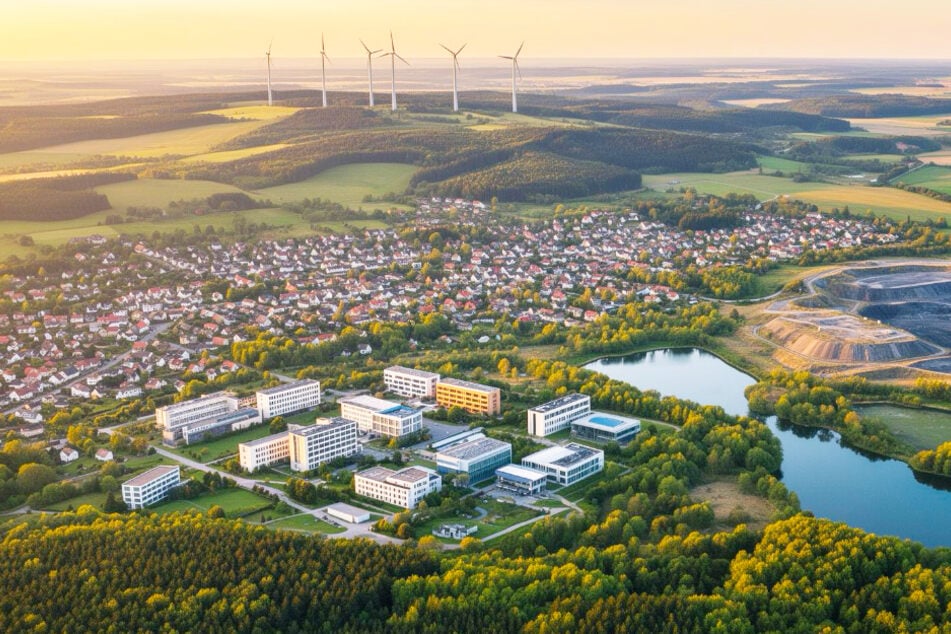
Between Saxony, Brandenburg, Poland, and Czechia, one of Europe's most important innovation regions is taking shape.
Lusatia's tri-border crossroads gives it a real edge as a research region; it's smack in the heart of Europe.
International partner universities and industry players are all close by, and researchers benefit from the proximity between pivitol research and cutting-edge projects.
Building a career here means growing together with a region that's in the middle of structural transformation, with plenty of opportunity to go around.
Even better: Beyond the research scene, the area also delivers a vibrant quality of life with its lake-dotted landscapes, family-friendly vibe, and easy access to trips across European borders.
At a glance: Exciting projects in Lusatia
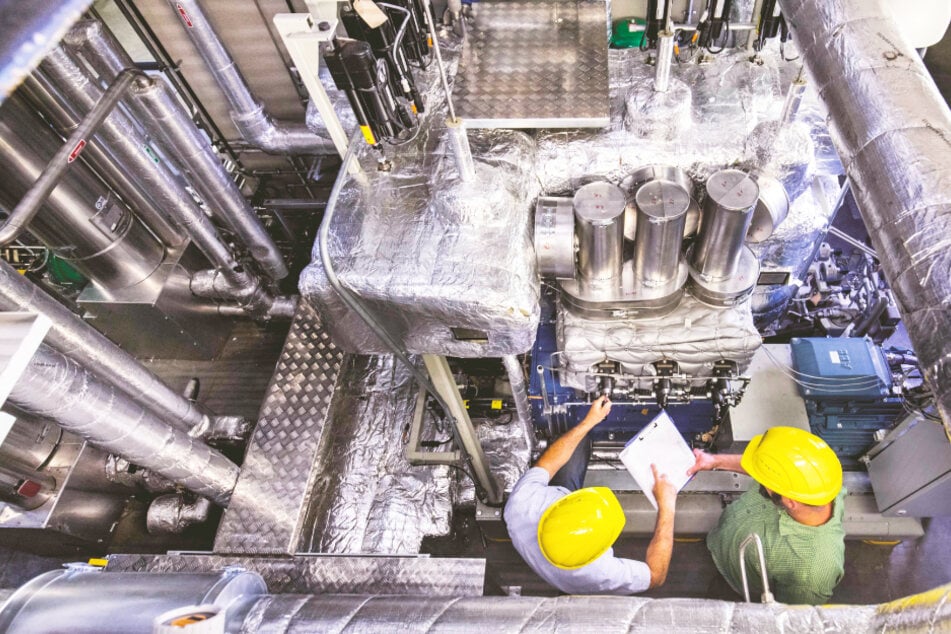
At the German Center for Astrophysics (DZA) in Görlitz, teams are working on radio astronomy, gravitational waves, and building a one-of-a-kind underground lab, with more to come.
Find out more here: Underground lab – pushing the limits of what's possible
Here, international teams collaborate with Helmholtz, Fraunhofer, Max Planck, and Leibniz, while cultivating major projects like the Square Kilometer Array Observatory.
Find out more here: Germany becomes a member of the Square Kilometer Array Observatory
At the Institute for Low-Carbon Industrial Processes at the German Aerospace Center (DLR) in Cottbus and Zittau, researchers are developing low-carbon industrial processes for the factories of tomorrow.
Find out more here: Institute for Low-Carbon Industrial Processes
The DC-Lab Saxony at Zittau/Görlitz University of Applied Sciences (HSZG) received €13 million in funding to build a testing environment for DC grids, unique across Europe, together with TU Dresden.
Find out more here: Federal government funds Europe-wide unique DC-Lab
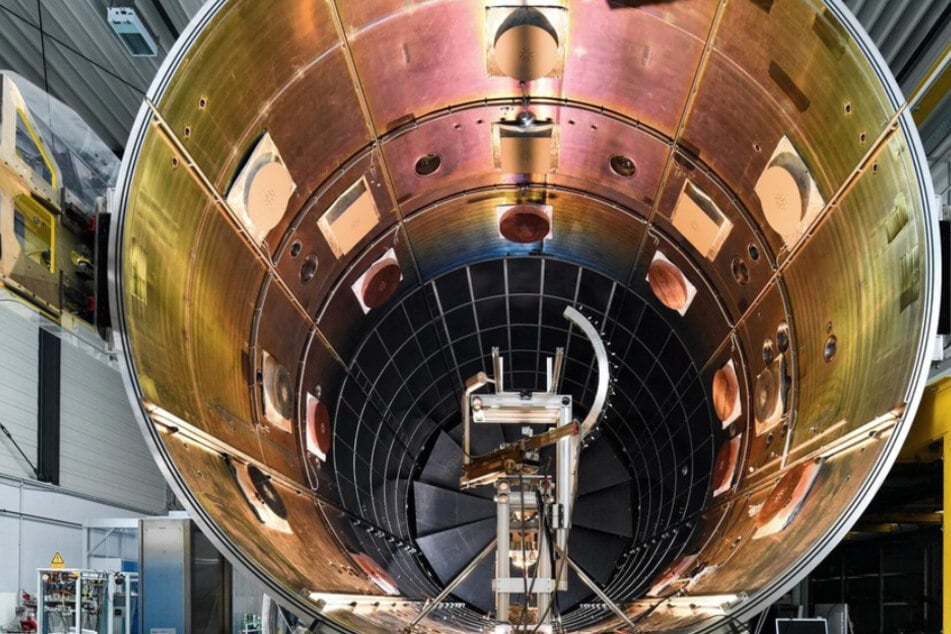
At HSZG's power plant lab in Zittau, the thermo-mechanical energy storage (TMS) system is taking shape as a prototype for a CO₂-neutral CARNOT battery that couples electricity and heat, and is designed to last up to 40 years.
Find out more here: Full steam ahead into the energy transition
In the AQVA HEAT project, HSZG in Zittau taps into the physical triple point of water to sustainably draw heating and cooling from rivers like the Mandau for municipal supply, funded by the Free State of Saxony.
Find out more here: A revolution in heat supply: sustainable energy from regional waterways
Anyone looking to help shape materials science, mechanical engineering, or hydrogen technology will find real-world use cases within the CircEcon project. TU Dresden, TU Chemnitz, TU Bergakademie Freiberg, and HSZG are jointly building a climate-neutral circular economy here, powered by AI, digitalization, and green hydrogen.
And as a partner to the semiconductor industry, HSZG brings research straight into production — no detours through years of pure theory to be seen.
Find out more here: Research Center for Greenhouse-Gas-Neutral Circular Economy
What makes Lusatia special? It's world-class international research, short distances to industry and the rest of Europe, and a region on the move — where careers are growing right alongside the place itself.
What's behind Hi!Lusatia
Hi!Lusatia is a network dedicated to strengthening Lusatia as the location to be for business, putting teaching, research, industry, and society front and center.
- 11+ research institutions
- 200+ research projects
- 1,000+ researchers
- Tri-border region: Germany–Poland–Czechia
- Research spanning astrophysics to climate-neutral industry
Cover photo: Hi! Lusatia e.V.