


Indigenous groups celebrate temporary halt to graphite drilling project in sacred Black Hills
Rapid City, South Dakota - A federal court in South Dakota has temporarily halted a graphite drilling project in the Black Hills after Indigenous groups took legal action.
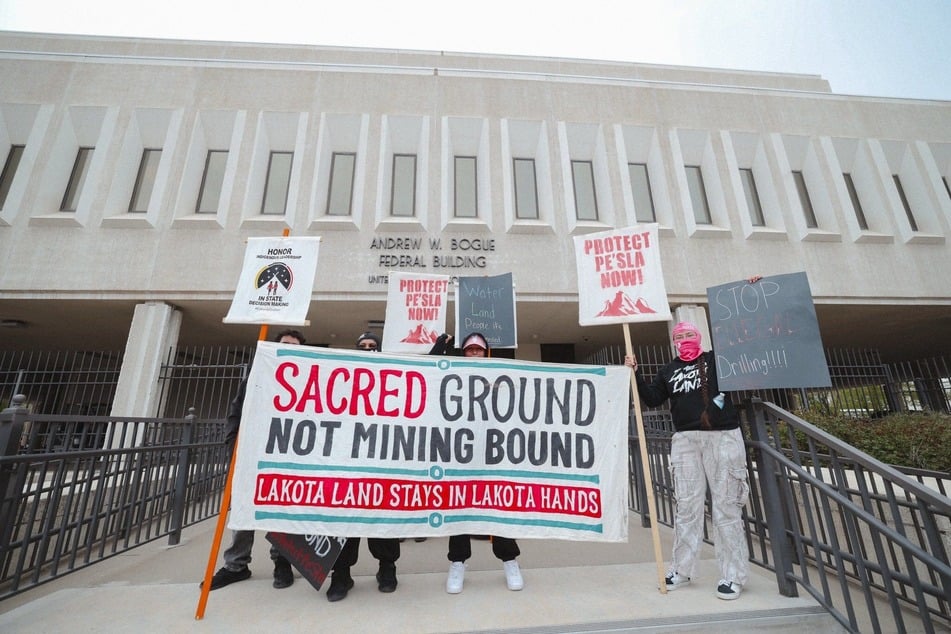
Exploratory drilling began in the central Black Hills (He Sapa) last month near Pe' Sla, a sacred ceremonial site of the Lakota, Nakota, and Dakota peoples as well as a critical water source.
US District Judge Camela Theeler issued the temporary restraining order preventing any drilling for graphite by the Rapid City-based mining company Pete Lien & Sons. She determined the move was "necessary to preserve the status quo and prevent irreparable harm to Plaintiffs until an evidentiary hearing can be held."
The decision came in response to a lawsuit against the US Forest Service brought by NDN Collective, the Black Hills Clean Water Alliance, and Earthworks and another complaint by nine Indigenous tribes.
"This is a huge win for the people, for tribal nations and for all those who believe in clean water and protecting Mother Earth," Wizipan Garriott, president of NDN Collective, said in a press release.
"We’ve successfully stopped drilling and ongoing harm for at least the next two weeks," Garriott continued. "This restraining order gives us an opportunity to prepare for the preliminary injunction hearing where the merits of the full case will be argued later this month."
"This is the first big step in this fight to protect Pe' Sla and clean drinking water for all."
"A big win for future generations"
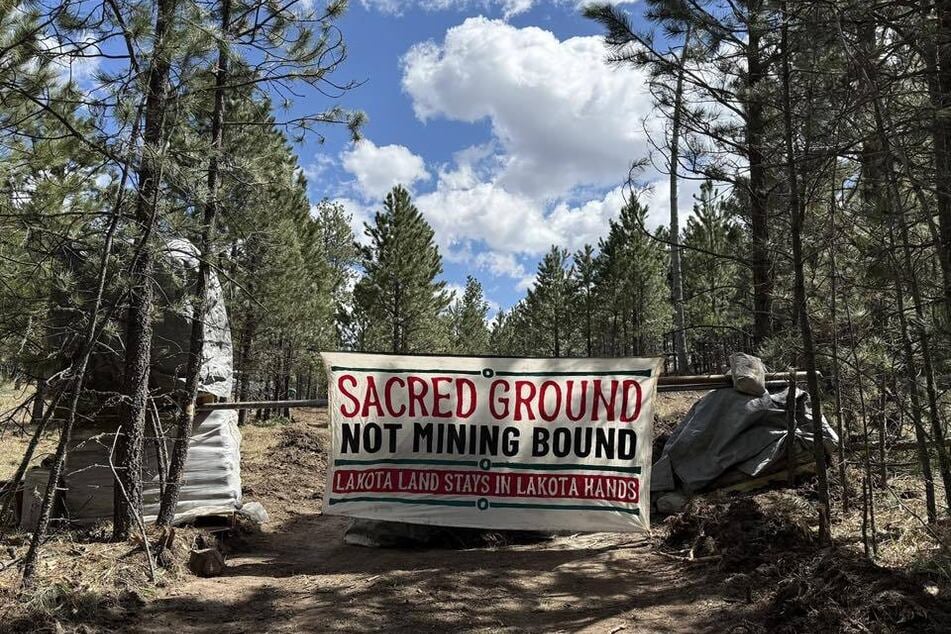
The US Forest Service approved a permit for exploratory drilling in the Pe' Sla area in February, allegedly without consulting with Indigenous tribes.
The move sparked outrage and powerful resistance from Indigenous groups. In an act of defiance, some Indigenous youth locked themselves to drilling equipment in order to block the activity.
The US government illegally seized the Black Hills in 1877 after gold was discovered there, violating the Treaty of Fort Laramie, which had guaranteed the land to the Sioux people (Oceti Sakowin).
The US Supreme Court ruled in 1980 that the Sioux were owed compensation, but tribes have rejected the funds while continuing to demand the return of their sacred lands.
After the temporary restraining order, Valeriah Big Eagle, director of He Sapa Initiatives at NDN Collective, said, "As a mother and an auntie, this is a big win for future generations, the land, and the water."
"This victory would not be possible without all the support from the people including our elders and spiritual leaders. This was a true community effort."
An injunction hearing in the case is expected to take place later this month.
Cover photo: Screenshot/Facebook/NDN Collective