


Mumia Abu-Jamal: Advocacy groups submit petition to United Nations calling for action
Philadelphia, Pennsylvania - A coalition of human rights groups on Tuesday submitted a new petition to the United Nations Working Group on Arbitrary Detention calling for intervention in the case of Mumia Abu-Jamal after decades behind bars.
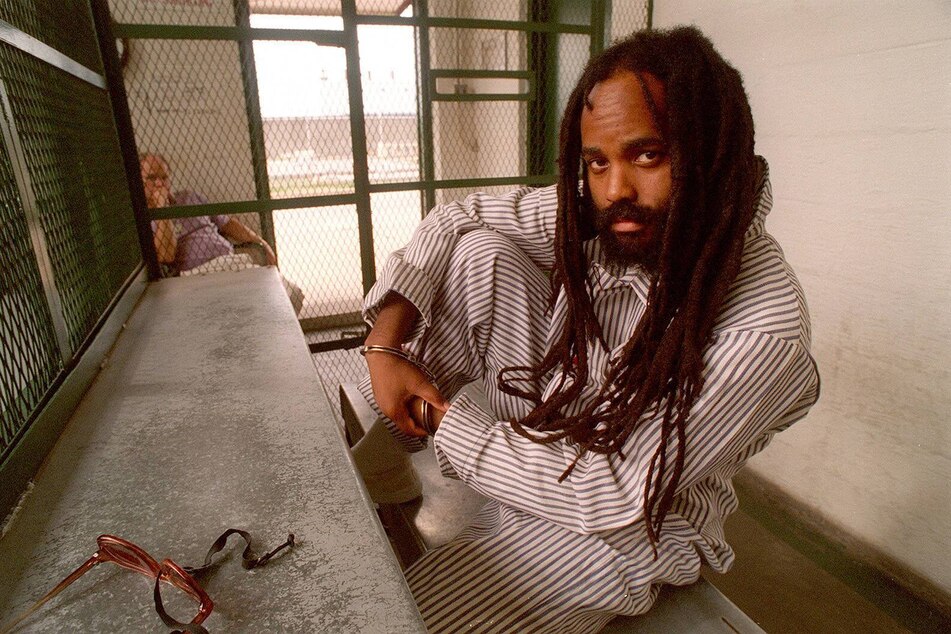
This December will mark 45 years in prison for author, broadcast journalist, and former Black Panther Party member Mumia Abu-Jamal.
Abu-Jamal was convicted in 1982 of first-degree murder in the fatal shooting of Philadelphia police officer Daniel Faulkner the previous year. The writer and journalist was found at the scene, having been shot himself.
Abu-Jamal, who has steadfastly maintained his innocence, saw his death sentence overturned in 2001. As of 2011, he is serving a life sentence without the possibility of parole, a form of punishment advocates refer to as death by incarceration (DBI).
Despite international Mandela Rules limiting solitary confinement to 15 days, Abu-Jamal survived 29 years in solitary confinement on death row.
"Continued detention of Mr. Abu-Jamal is not reasonable or necessary," reads the petition submitted by the Abolitionist Law Center, American Civil Liberties Union, Center for Constitutional Rights, California Coalition for Women Prisoners, and Release Aging People in Prison Campaign.
"In combination with the manifest unfairness of his trial and appellate processes, targeting by the state for his political expression, and the systemic and individual racism inflecting his treatment over the past 44 years, Mr. Abu-Jamal’s continued detention is arbitrary under international law."
As the petition lays out, Abu-Jamal's case has sparked widespread accusations of racial discrimination and injustice, from the systematic dismissal of Black jurors during his trial to the deprivation of his right to self-representation.
A Philadelphia court stenographer even signed an affidavit stating she heard the judge in the case say, "I’m going to help them fry the [n-word]," referring to Abu-Jamal.
"The inherent arbitrariness of an indefinite DBI sentence, which allows no periodic review of continuing need or reasonableness, in combination with Mr. Abu-Jamal’s many years served to date, advanced age, declining health, and lack of risk to the public violates multiple provisions of international law," Samah Sisay, a staff attorney at Center of Constitutional Rights, said in a statement.
Mumia Abu-Jamal: "Hope is an element of struggle"
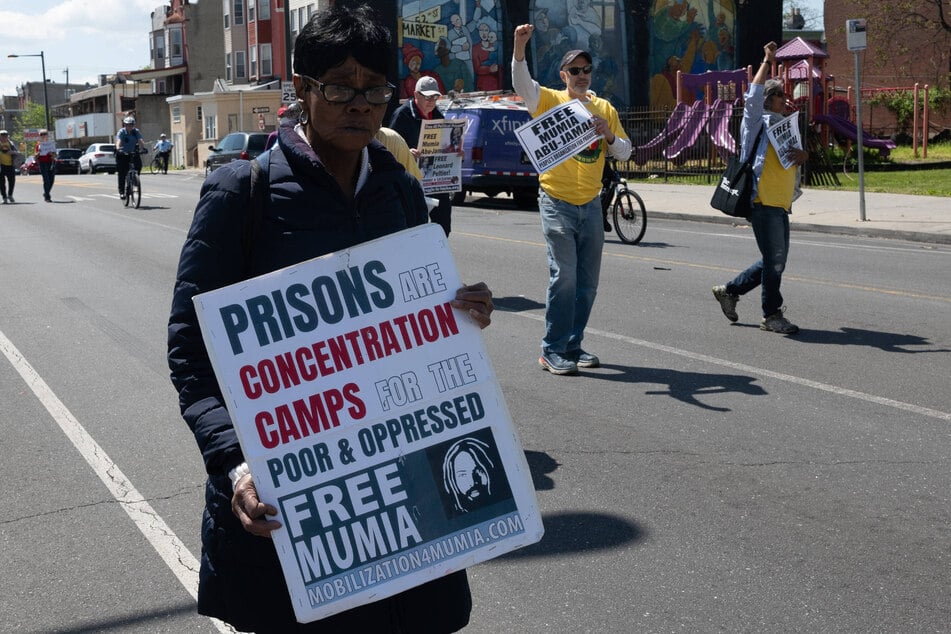
Now 72, Abu-Jamal has exhausted all legal pathways for relief in the US, per the petition.
Meanwhile, he has suffered a series of severe medical crises while in Pennsylvania Department of Corrections custody.
"Mumia’s case exemplifies the racism endemic to the criminal punishment system in Philadelphia in the 1970s and 1980s, and the use of incarceration as a tool of political repression," Abolitionist Law Center Executive Director Saleem Holbrook said in a statement.
Amnesty International found Abu-Jamal's 1982 trial "failed to meet minimum international standards safeguarding the fairness of legal proceedings."
"At every step, the case against Mumia violated fundamental legal principles. He would be free if courts applied the law to his case instead of playing politics with the Constitution," the Abolitionist Law Center's Legal Director Bret Grote said.
"We are seeking a ruling from the United Nations that exposes the bias, racism, and cruelty of the judicial system in Mumia’s case."
For Abu-Jamal, it is important to maintain hope and motivation in spite of the unfathomable challenges he has faced over the last nearly half century.
"Hope is an element of struggle, is it not?" he told The Guardian in an interview from the Mahanoy state prison. "As we used to say in the old days, 'A luta continua.'"
"I’ve rarely, if ever, placed my hope in courts of law," he explained. "But I do trust in people, as people are the ones who build movements and make change."
Cover photo: IMAGO / ZUMA Press Wire