Washington DC - President Donald Trump recently said that he believes bringing down the number of vaccines given to small children will also bring down autism rates.
In a recent interview, Trump sang the praises of his Health and Human Services (HHS) Secretary Robert F. Kennedy Jr., who was a prominent anti-vaccine advocate before being appointed to the role.
Trump insisted Kennedy was "doing a great job," adding, "People love him."
Then the president was asked if he believed there should be a Vaccine Safety Commission, to which he responded with a lengthy rant.
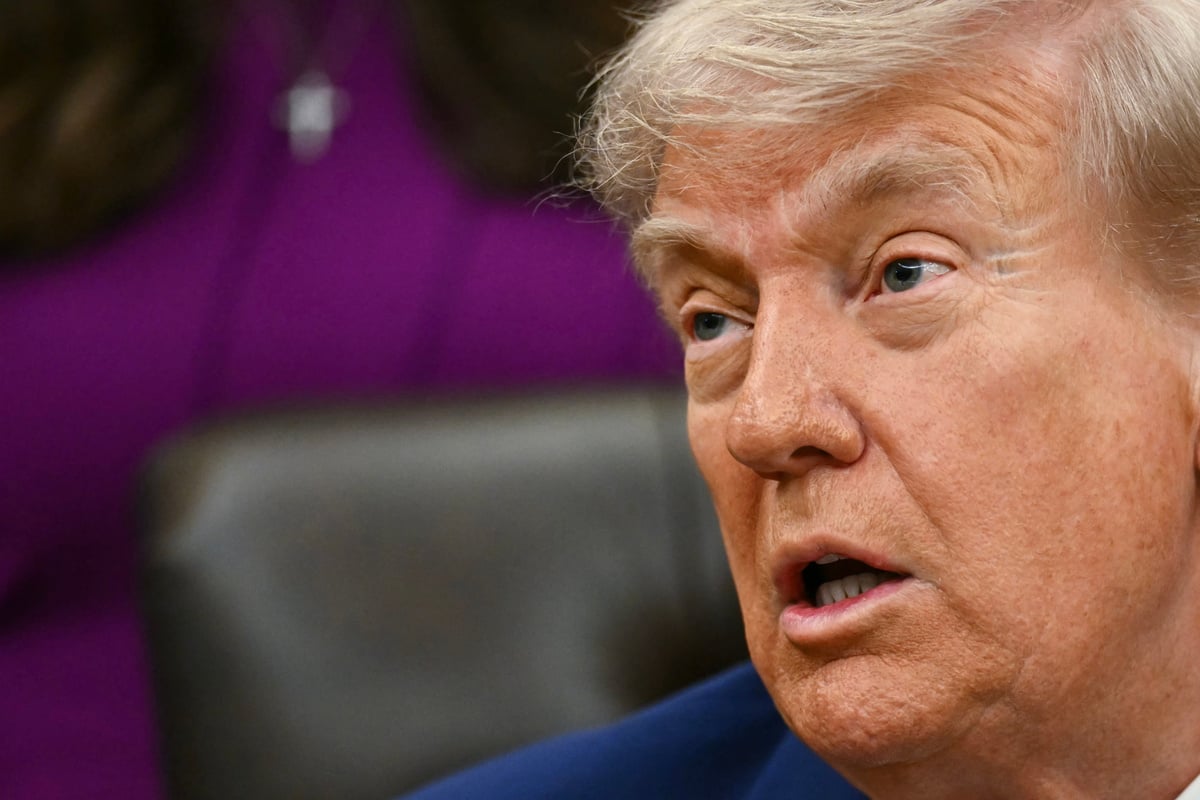
In it, he revealed that though he "believes" in vaccines, he doesn't believe there should be a mandate.
"I think we're up to 88 vaccines," the president claimed.
"They want to cut some out, and I think that's good, too, and I agree with that. Eighty-two's too many. If you look at Denmark and other countries, you have 12, 14, I think 17. And we have like 82," he continued.
"But I look at these beautiful little babies, and they get a vat, like a big glass, of stuff pumped into their bodies. And I think it's a very negative thing to do."
Trump concluded that he would like to see children get "like four visits to the doctor," as he believes, without any given evidence, that it will lead to "a much better result with the autism."

Donald Trump and Robert F. Kennedy Jr.'s vaccine conspiracies
For years, both Trump and Kennedy have pushed the theory that vaccines cause autism. This comes despite decades of scientific studies showing that there is no definitive link found between the two factors, with experts saying that vaccines are safe and effective in fighting and preventing diseases with very few negative outcomes.
Shortly after taking over HHS, Kennedy fired all of the members of the Advisory Committee on Immunization Practices, and has since made efforts to install members that hold his beliefs on vaccines.
More recently, he did the same with the Interagency Autism Coordinating Committee, with a large number of the new members having pushed similar vaccine theories in the past.