


"Gus" the T. rex to go on auction in New York for monster price
New York, New York - One of the world's most complete Tyrannosaurus rex skeletons, nicknamed "Gus," was showcased Wednesday at Sotheby's auction house in New York ahead of its sale later this month.
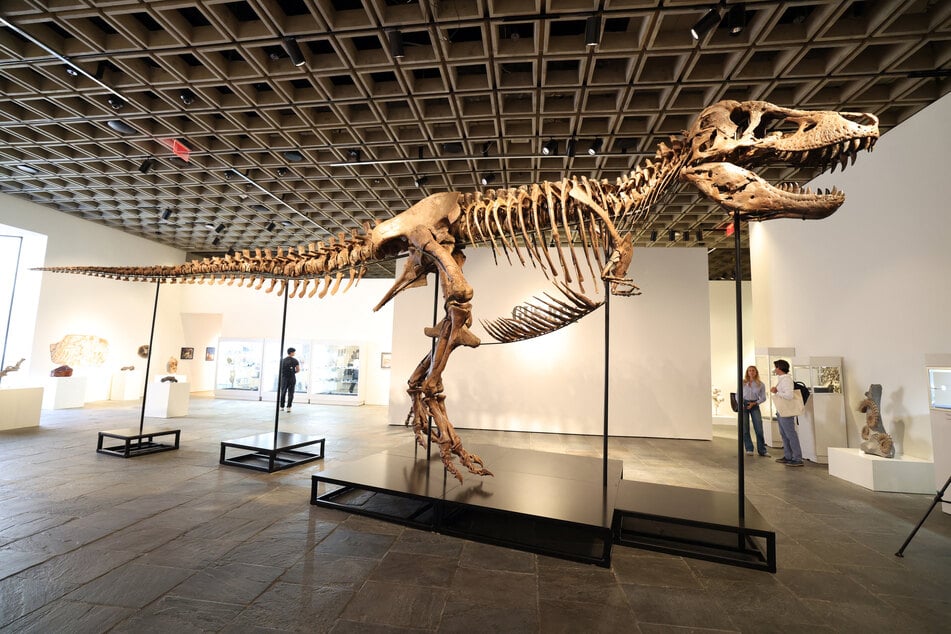
Valued at between $20 million to $30 million – the highest price estimate ever for a dinosaur – the giant fossil was discovered on a cattle ranch in South Dakota in 2021.
"Gus" lived during the Maastrichtian period, some 72 to 66 million years ago, which was characterized by a warm climate, high sea levels, and vast floodable coastal plains.
The skeleton measures 38 feet in body length, making it one of the largest T. rexes ever discovered. It has 183 fossilized bones and is roughly 63% complete.

"Gus" is on view in New York until July 14, when the auction will take place.
"Judging from the overall size and degree of bone development it can be determined that Gus’ skeleton belonged to a very large, robust, adult individual," a description on the Sotheby's website reads.
"The skeleton displays a number of pathologies, including signs of tyrannosaurid bite marks to the skull bones and right dentary, as well as to several post-cranial elements, all sustained by either combat or post-mortem scavenging, in addition to injuries which occurred during the life of the individual, with fractured and healed bones discernable [sic] in several ribs and gastralia."
"Professionally prepared, and accurately articulated anatomically, Gus’ skeleton, which is superbly fossilized, is mounted in a predatory pose on a custom steel armature."
Cover photo: TIMOTHY A. CLARY / AFP