


Sperm whale sinks yacht and leaves sailors in a fight for survival: "A full mayday"
Wellington, New Zealand - A sperm whale cracked the hull of a yacht sailing in the remote South Pacific, forcing four sailors into a day-and-night fight for survival on the high seas.
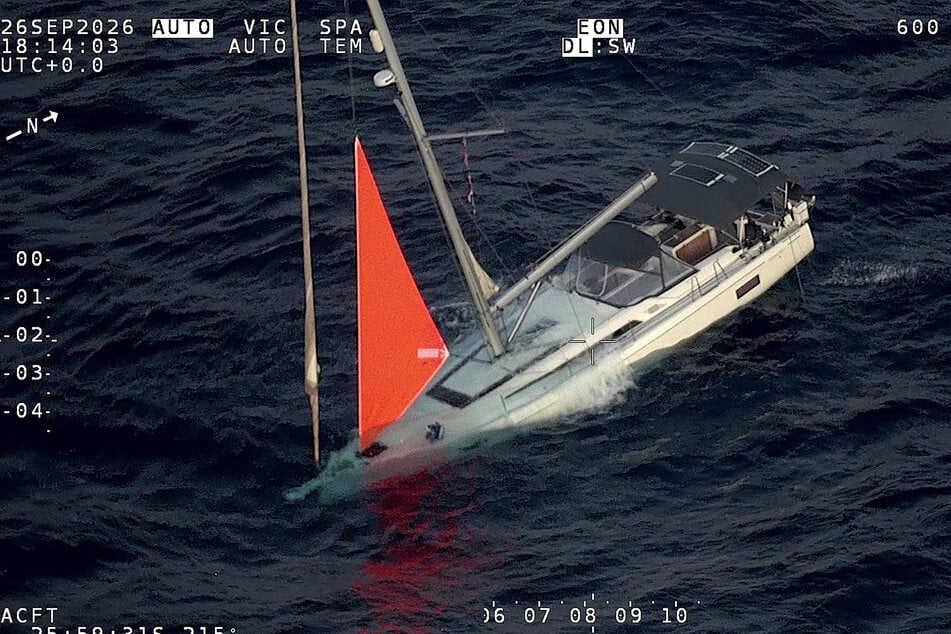
Crew members on the 52-foot Tai Tam told AFP on Thursday of their weekend encounter with a pod of sperm whales 250 nautical miles north of tiny Norfolk Island.
"There was sort of a loud thud. The whole boat was pushed sideways," said Australian Jemma Cooper, who was thrown from the steering wheel by the force of the blow.
Not knowing at first what had happened, she noticed a brown discoloration in the water and a sperm whale.

"We looked out to our port side, and there were six to eight, a pod, of whales there. So then it became clear that that's what it was," she told AFP.
Her husband Jeremy Cooper said he was sleeping below deck when the impact woke him.
"It was pretty immediately evident it was very serious," he said.
"All the steering gear was smashed on the starboard side, and there was a significant amount of water coming in," Jeremy told AFP.
At 1 PM New Zealand time Saturday – about 30 minutes after the whale collision – they activated an emergency beacon.
"We declared a full mayday," said New Zealand crew member Terry Hetherington, adding they spent the next few hours bailing out as much water as they could.
Container ship crew helps rescue stranded sailors
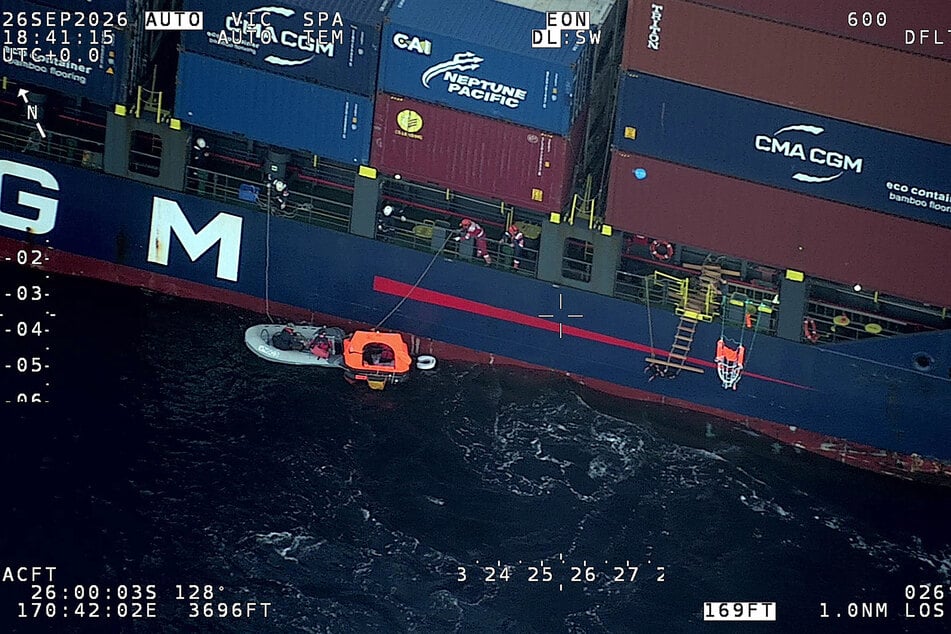
The Royal New Zealand Air Force flew a P-8A Poseidon patrol plane to the area to establish radio communications and coordinate the rescue.
French crew member Martin Jaffre, a joiner, said the whale collision left several gashes in the hull and cracked the fibre glass structure, as well as breaking the steering.
"We could no longer steer the boat, and a boat with no steering quickly becomes a problem," he told AFP.

Jaffre battled to slow the incoming water with anything to hand, including expansion foam, and swam below the boat to inspect the hull, his crewmates said.
The sailors tried to stay aboard as long as possible, struggling to stop the engine from getting clogged and bailing by hand.
Late at night, they abandoned the boat and transferred to a life raft in calm seas and under a full moon.
In the early hours of Sunday morning, they cut the tether to the yacht, fearing it might drag them down. Soon after, it slipped beneath the waves.
A 470-foot container ship, the MV Sofrana Surville, rescued the sailors at 6 AM Sunday, the New Zealand military said – about 18 hours after their encounter with the sperm whale.
Even the rescue was scary as the giant ship approached their tiny life raft, recalled Jeremy Cooper.
But within half an hour they had scaled a ladder to join their rescuers, have a cup of coffee and chat with the captain, he said, ruing the end of their Pacific voyage.
"It was wonderful, wonderful, and just a terrible, terrible ending – but luckily no loss of life."
Cover photo: HANDOUT / NEW ZEALAND DEFENCE FORCE / AFP