


This tiny mouse is shaking up scientists' understanding of physiological limits!
Washington, United States – One tiny animal has a lot to teach us about life – researchers say the Andean leaf-eared mouse is shaking our understanding of physiological limits!
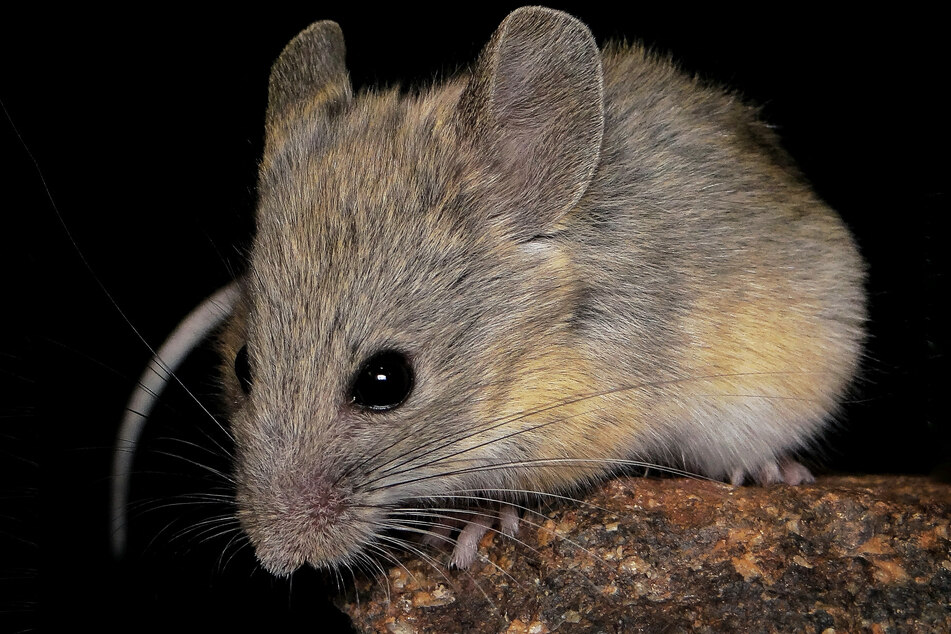
At first glance, it's just a rodent; but the Andean leaf-eared mouse is, in fact, a natural marvel.
The small mammal can live at altitudes exceeding 21,982 feet in the Andes, and its capabilities challenge our understanding of physiological limits.
Six years after discovering the animal living on some of the world's highest peaks – where mammalian life was previously considered impossible – an international research team is unraveling the secrets of this extraordinary animal.

The mouse, so small that it can fit in the palm of a hand, holds several world records, said Zachary Cheviron, a biology researcher at the University of Montana and coauthor of a new study on the mammal.
"They have literally the world's record for the highest dwelling mammal on the planet," the researcher told AFP, adding that it can live in areas where mountaineers barely venture.
Plus, this little mouse has range. The same species that can survive atop Chilean peaks has also been found at sea level. According to Cheviron, they "have the broadest elevational distribution of any mammal on the planet."
The animal's vast range is made possible by a resilience and adaptability that is phenomenal in several respects, wrote the research team, who believe their findings could offer valuable insights for human medicine.
A mouse with superpowers
Researchers say the species of mice are genetically similar to humans who have evolved to live in deserts, tropical regions, or at high altitudes.
"It's kind of a nice model of humans in a lot of ways," Cheviron said.
The mice in the snowy heights have a handful of distinct genes, including one already known to be linked to adaptation to hypoxia – oxygen deprivation – in populations of Tibetan people. But these mice have bodies that respond very differently.
They "have gained these superpowers to be able to survive in a low oxygen environment," said Jay Storz, an evolutionary biologist at the University of Nebraska, who is also a climber.
Experiments conducted in a cold-chamber setting reveal that these mountain mice are particularly adept at maintaining body heat. Initial findings also suggest that the rodent doesn't produce extra red blood cells to capture oxygen more efficiently – as other mammals do – but instead breathes more rapidly. To counteract any harmful effects from accelerated breathing, the animal relies on a modified enzyme.
Scientists say other mechanisms are likely at play, but preliminary findings could prove useful for future research.
These mice show how resilient life is

Many human diseases, particularly heart conditions, involve complications resulting from impaired oxygen delivery, per Storz.
"Understanding the ways that animals like leaf-eared mice have evolved to cope with low oxygen availability in their natural habitat can help guide the design of treatments for human patients that are suffering basically the same physiological state for different reasons," he said.
Such insights could, for example, aid cancer research, Cheviron said, as tumors can create "a hypoxic environment" as well.

Beyond the implications for human medicine, Cheviron emphasized how the discovery of the mountaineering mice "really kind of pushed what we thought about the limits of mammalian life."
Not only can they survive in low-oxygen environments, in a desert of snow and rock, but the mice also subsist on scarce, toxic plants.
Genes that play key roles in the metabolism of dietary toxins have been identified in the genomes of Andean leaf-eared mice.
"Nothing comes easy to these guys," said Storz, saying the research lends new appreciation of "how resilient life is."
"Really we have a new understanding of, just kind of the environmental limits of vertebrate life."
Cover photo: Collage: AFP/Jay Storz/Handout & AFP/Marcial Quiroga-Carmona/Handout