


Tropical Storm Lala and El Niño poised to slam Hawaii with hurricane force as governor declares emergency
Hawaii - A strengthening tropical storm named Lala is set to hit Hawaii's Big Island with hurricane force on Saturday, bringing dangerous winds, rainfall, and surf as the state's governor declared a state of emergency.
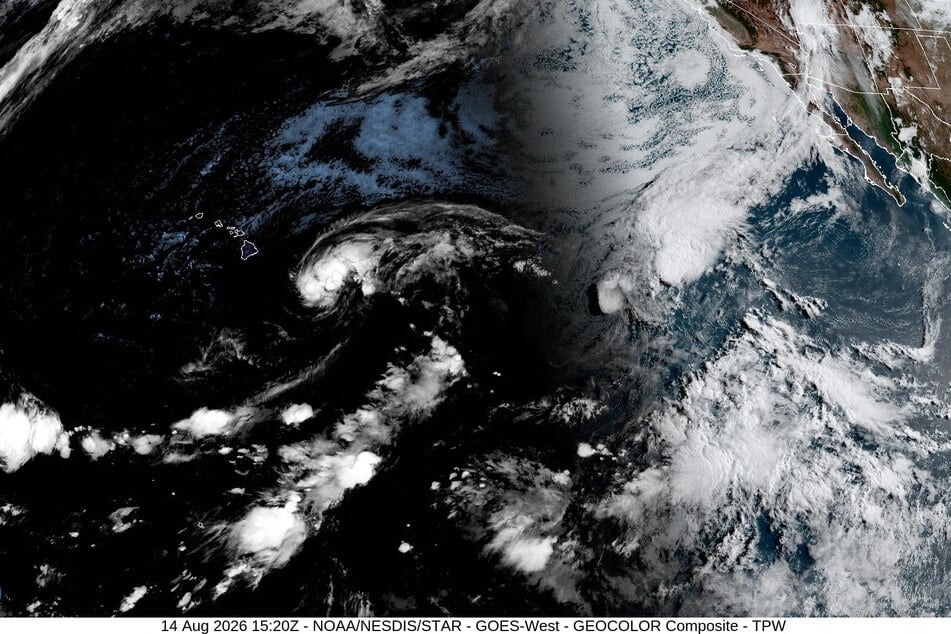
The tropical cyclone was about 420 miles (680 kilometers) southeast of Hilo on the archipelago's largest island, the National Oceanic and Atmospheric Administration (NOAA) said in its latest advisory, packing winds of 60 miles per hour.
A hurricane warning was in effect for Hawaii County, which covers Big Island, and a tropical storm warning was in effect for the island of Maui, Molokai and Kahoolawe to its northwest.
Lower-grade tropical storm watches were in place for other islands.

Rainfall of 8-12 inches was predicted across Maui and the Big Island, with up to 25 inches in certain pockets of Big Island, and a storm surge of 1-3 feet.
Rough conditions could persist into Sunday.
Governor Josh Green on Thursday proclaimed a state of emergency to ensure the state and its counties "have sufficient resources to clear debris, secure infrastructure, and take other measures to prepare."
Hawaii's emergency management agency recommended residents clear gutters and drains and move valuables off the ground, seal gaps in doors and remove tree limbs that threaten their properties.
"Stay away from beaches and coastal areas where rough surf and rip currents could sweep you away," it added.
When was the last "major" hurricane to hit Hawaii?
Hawaii was menaced by Hurricane Fausto last month, before it weakened and skirted north of the island chain.
The 50th US state was last hit by a "major" hurricane – meaning Category 3, 4, or 5 on the Saffir-Simpson scale – in 1992, when Hurricane Iniki caused at least six deaths and billions of dollars in damage.
The storm comes as a powerful El Niño has formed in the central equatorial Pacific Ocean, with temperatures already so high that NOAA now predicts a 69% chance of a "historic event that would exceed the strength of previous El Niño events dating back to 1950" when it peaks between October and December.
El Niño, a natural climate pattern in which sea surface temperatures in the central and eastern Pacific Ocean become unusually warm, tends to promote hurricane activity in the Pacific while suppressing it in the Atlantic.
Cover photo: Handout / NOAA / AFP