


Incubator shortages and premature births strain Gaza's hospitals amid Israeli siege
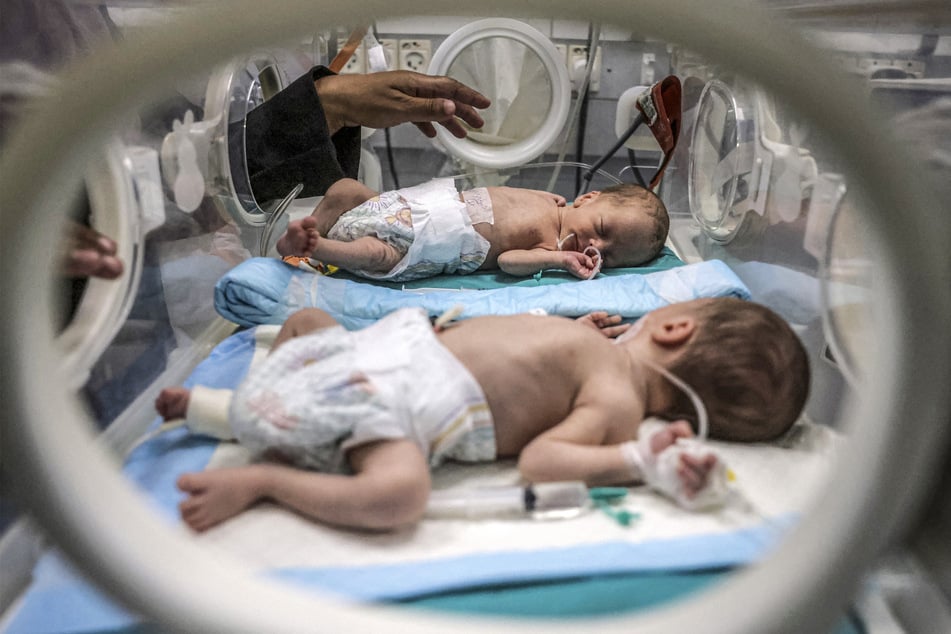
Khan Younis, Palestine - As monitors beep and doctors consult near them, two tiny newborns lie silently side-by-side, sharing a single incubator in a southern Gaza hospital running short on space and supplies.
Gaza's youngest already face an extremely precarious entry into the world, given the dire humanitarian situation in the territory under Israeli siege.
But for babies needing specialist care, such as those born prematurely, the road ahead is even more perilous.
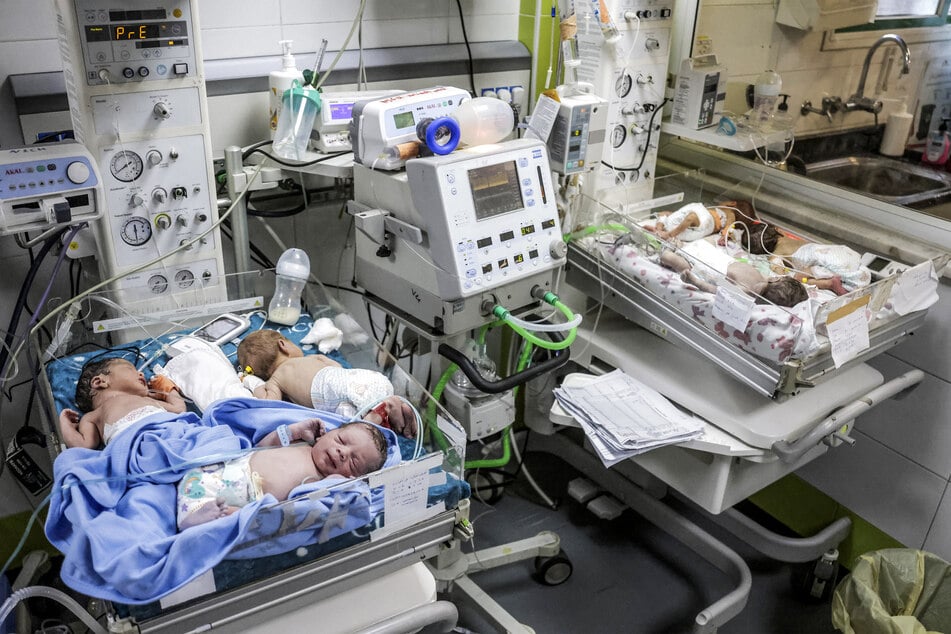
"The situation is dire: there is no oxygen available for them, nor is there any spare incubators in the hospital," said Hatem Dhahir, head of the neonatal department at Nasser hospital in the southern city of Khan Younis.
"We're trying to transfer them to other hospitals, but they're always full and the situation is very bad. Most of the children need oxygen and are very underweight, and things are going from bad to worse," he told AFP.
Israel's assault has devastated the Palestinian territory's healthcare system, with many medical facilities rendered completely or partially unusable.
Ongoing Israeli restrictions on goods entering the Gaza Strip mean medical supplies and specialist equipment are also running low.
Dhahir said Nasser hospital had seen a significant increase in the number of premature births in recent months, as well as twins and triplets.
The influx was forcing staff to place two or even three babies in each incubator, he said.
In March, the UN's humanitarian agency OCHA said that one in three pregnancies in Gaza were high-risk and 70% of newborns were premature or underweight. Incubator sharing significantly increased mortality risks, it said.
Israeli blockade having enormous impact on Palestinian maternal health
Nearly the entirety of Gaza's population was displaced at least once during the devastating siege.
Israel's attacks flattened swaths of the territory, left hundreds of thousands of people living in tents and temporary shelters, and shattered vital infrastructure such as sanitation and access to safe water.
Despite a US-backed ceasefire declared in October 2025, the Israeli military continues to target Palestinians.
A UN-mandated inquiry published in June said that severe shortages of food, medical supplies, fuel and the collapse of healthcare services had an enormous impact on maternal health.
"Against this background, rates of miscarriage, stillbirth, low-birthweight infants and congenital defects have increased," the UN's Independent International Commission of Inquiry said.
Heart conditions were among three types of congenital defects to have particularly increased, the commission said, citing medical practitioners.
In southern Gaza, Mona Ahmad was accompanying a baby taken to Nasser hospital in late August and diagnosed with a serious congenital defect in which the heart's two main blood vessels are switched in position.
"We received a final report stating that the baby was suffering from transposed arteries and needed to be transferred, as there was absolutely no treatment available for her here," Ahmad told AFP.
"The baby spent a full week in the neonatal unit and was discharged because there was no room for her there," she added.
In a bid to revive Gaza's neonatal care system, the UN children's agency UNICEF has scaled up its work to supply medical equipment such as incubators, ventilators, and monitors to hospitals.
Including work that began before the ceasefire, UNICEF has supplied 93 incubators to six facilities across the Gaza Strip.

But challenges remain immense and more needs to be done, said Toby Fricker, chief of advocacy and communications for UNICEF Palestine, following a visit to a neonatal intensive care unit in the territory.
For now, "through the pure... resilience of the doctors, of people, things are working," he said.
Cover photo: BASHAR TALEB / AFP