


"The Enhanced Games" sees the world's best athletes compete while on performance-enhancing drugs
Las Vegas, Nevada - The first-ever Enhanced Games – widely dubbed the "Steroid Olympics" – will take place Sunday in Las Vegas, where elite sprinters, swimmers, and weightlifters will vie for world records while taking banned performance-enhancing drugs.

Either a bold exploration of the upper limits of human capability and technology, or a dangerous circus created to peddle dubious "biohacking" supplements to viewers, depending on who you ask, the wildly controversial event has generated countless column inches before a single race has been run.
It has the deep-pocketed backing of a MAGA crowd, including Donald Trump Jr and billionaire Peter Thiel, plus Middle Eastern financiers.
Bona fide Olympic medalists like US sprinter Fred Kerley and British swimmer Ben Proud have been lured to take part with potentially life-changing prize money.

Anyone who beats a world record will take home a $1 million prize, while winners at the 2,500-seater arena at Las Vegas casino Resorts World will each receive a $250,000 jackpot.
But since they were first mooted in 2023, the Enhanced Games have been slammed by organizations like the World Anti-Doping Agency, whose chief Witold Banka said the "dangerous" event "must be stopped."
Some 42 athletes will participate in the Enhanced Games. Events include a 100-meter sprint, freestyle and butterfly swim races, snatch and clean-and-jerk weightlifting, and strongman deadlifts.
Who is competing in the Enhanced Games?
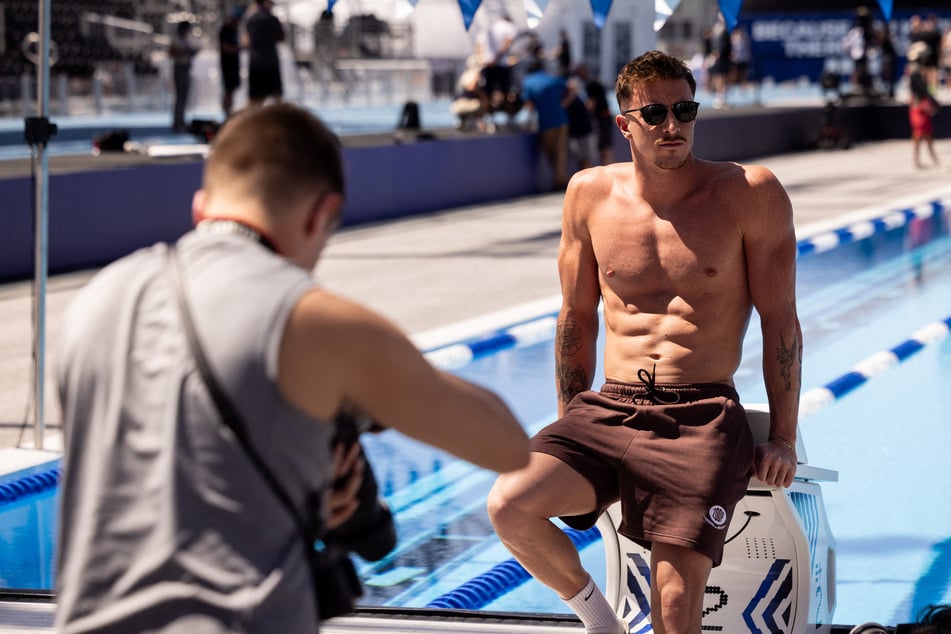
Most competitors are current or recently retired athletes who achieved remarkable success in "clean" sport but could have never dreamed of the payouts on offer in Las Vegas.
Former Irish Olympic swimmer Max McCusker's interest was piqued when he was approached by a former teammate, and he learned he could win prize money totaling 25 times more than the $10,000 he estimates that he grossed "in my whole swimming career."
He has spent the past four months in Abu Dhabi, where doctors administered substances including anabolic steroids, testosterone, and human growth hormone to athletes, all while meticulously tracking their bodies' response via biomarkers.
"This is just game-changing," said McCusker, who said his body fat has nearly halved to 6.4%, and reported that he is "swimming faster times than I was pre-Olympics" despite having retired from swimming for a year after Paris 2024.
What drugs are the Enhanced Games athletes taking?
The exact combination of drugs taken by each athlete has not been revealed. A handful are competing clean.
Organizers say only substances approved by the US Food and Drug Administration have been administered, and the process is overseen by an independent medical board.
But University of Birmingham sport science professor Ian Boardley says that, while biomarker measurements can help mitigate short-term acute harm, the long-term risks of the substances being used are almost totally unknown.
"They are putting themselves at risk of life-shortening and fatal consequences," including danger of heart issues, liver and kidney damage, and cognitive decline, from anabolic steroids alone, he told AFP.
Testosterone use can trigger dependency and depression, while many peptides are a "wild West" about which even less is known, said Boardley.
Athletes have been told they will be tested and monitored long-term, though, and McCusker sounded sanguine about the chance of negative effects down the line.
"Is there a chance? Yeah, there could be a chance. But we're doing everything to mitigate these chances," he said. "There's a chance that if you drink too much caffeine, there could be something wrong with you."
And, in any case, "Do I think the Olympics is clean? Hell no. Sport is not clean," he added.
Cover photo: Unsplash/Raghavendra V. Konkathi