Montreal, Canada - Rattled by President Donald Trump's second term – marked by tariffs hammering Canada's economy and outrage over repeated annexation threats – the European Union (EU) and Canada are seeking to elevate their partnership to the "highest level possible" to counter a "world of growing rivalries," the 27-nation bloc's chief said Thursday ahead of a summit with Canadian leader Mark Carney.
Brussels and Ottawa are to lay the groundwork for an ever-closer partnership at a two-day summit in Montreal, as they navigate uncertain ties with the United States and China.
"We both want to bring our relationship to the highest level possible," von der Leyen said, doubling down on the prospect of Canada becoming the European Union's "first associate member" despite an intra-EU squabble over the term.
"Our idea is simple: it is an 'association without accession'," she told an event organized by a research institute.
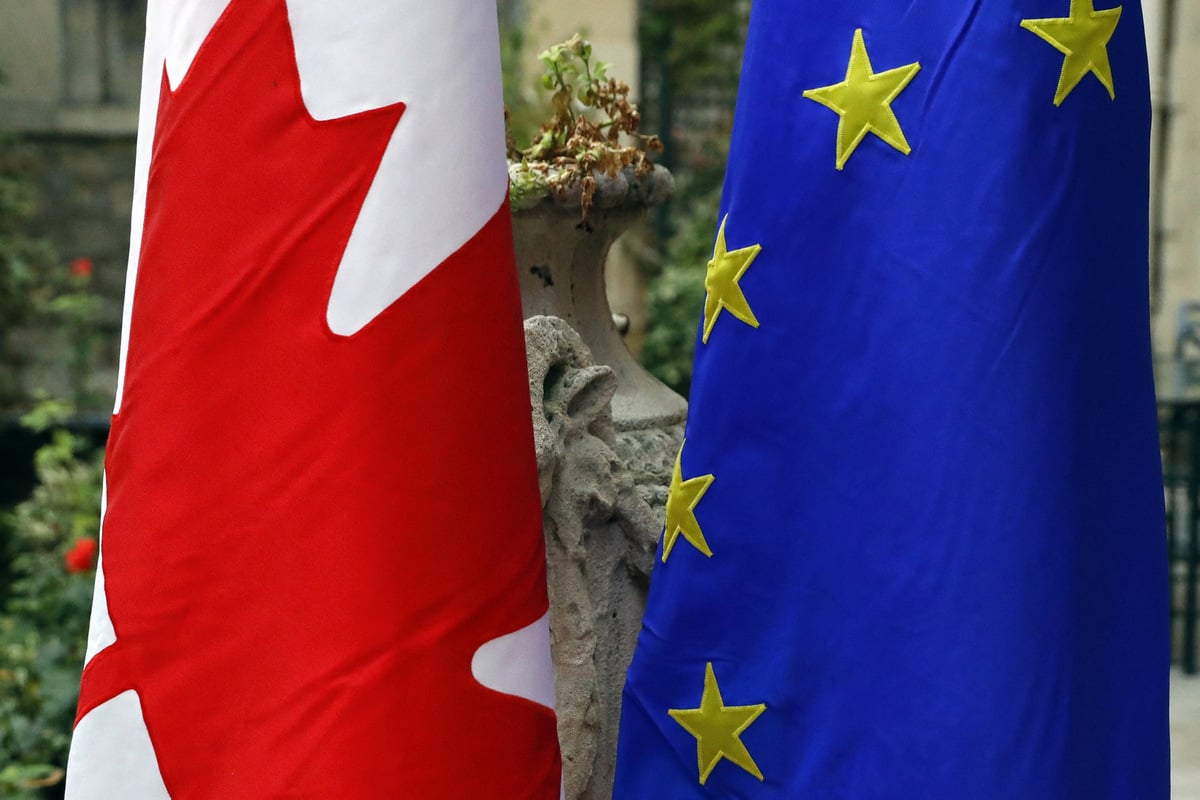
Von der Leyen first suggested Canada could become an "associate member" last month, but the title doesn't exist in EU treaties.
Some member states led by Germany successfully pushed to drop the term from a joint summit statement, after prolonged wrangling which threatens to take the shine away from the Montreal talks.
Canada and the EU have both been rattled by President Donald Trump's second term. Trump's tariffs have hammered the Canadian economy, while the president's repeated annexation threats have caused outrage.
Prime Minister Mark Carney has warned relations will not return to a pre-Trump normal and told Canadians that reducing dependence on the United States is an urgent priority.
Trump has said he could view deeper EU-Canada ties as a "hostile act" that requires retaliation.
But speaking Thursday ahead of the EU summit, Carney said that when Canada is more diversified, "the US will see the benefit."
The EU has equally faced US tariffs, and Trump and his top allies have piled criticism on European political leaders.
China's growing economic heft has also unnerved Brussels, which has moved to protect its industry from what it views as unfair competition from rivals subsidized by Beijing and to ease its dependence on Chinese goods and raw materials.

"When trade becomes a tool of economic pressure, families pay the price, from the supermarket shelf to the cost of a new car. We are seeing in real time our sovereignty being attacked," von der Leyen said.
Brussels and Ottawa could either "go it alone" or "take a more strategic approach with trusted partners that face the same challenges," she said.