


China says it's "legitimate" to apply ethnic unity laws beyond its own borders
Beijing, China - China said it has the "legitimate" right to target people beyond its borders under a new "ethnic unity" law, a senior judicial official said on Wednesday, despite warnings it could be used to marginalize minority groups.
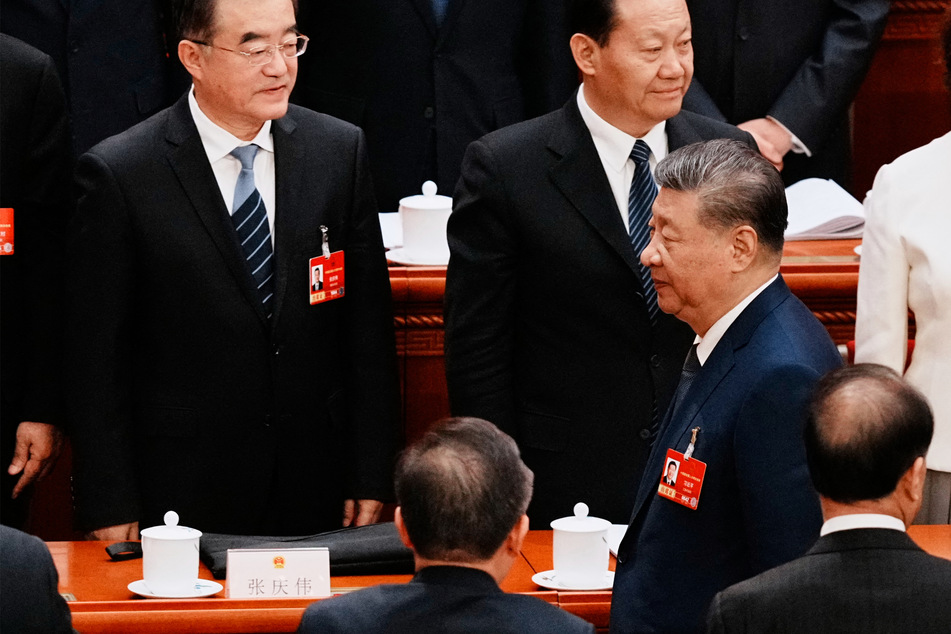
Beijing's new Ethnic Unity and Progress Promotion Law will come into effect on July 1, with the goal to forge a "shared" national identity among ethnic groups.
The law, which contains a clause saying people and organizations overseas can be held liable for violations, has concerned rights groups, which argue it could provide Beijing with legal justification for pursuing minorities overseas.
In particular, experts are concerned that Beijing will pursue Uyghur and Tibetan groups, which the Chinese government is accused of repressing.
Vice Justice Minister Hu Weilie defended the legislation on Wednesday, saying the clause "aligns with legal principles."
"This provision is grounded in national realities… conforms to international practice, and constitutes a legitimate, lawful, necessary, and feasible legal measure," Hu said during a news briefing, according to an official transcript.
China officially recognizes 55 ethnic minorities, besides its dominant Han majority, and has consistently denied that it engages in rights violations and repression.
The law, passed by the National People's Congress in March, formalizes longstanding policies to promote Mandarin as the language of education, official business, and public spaces. Social cohesion is a key focus.
In a statement last year, Human Rights Watch said the law could "facilitate intensifying ideological controls" and "target ethnic and religious minorities including by erasing minority language rights."
It might also "foster control beyond China's borders," the group said, adding that Beijing "routinely" sought to repress its critics overseas.
Hu defended the law, however, saying: "Its fundamental purpose is to safeguard ethnic harmony, social stability, and national security, which aligns with the spirit of international law."
Cover photo: AFP/Vincent Thian/POOL