


Iran says it won't allow UN inspectors at bombed nuclear sites
Tehran, Iran - Iran said Tuesday that the UN's nuclear watchdog will not be able to inspect key nuclear sites bombed by the US and Israel last year, as the first round of talks to end the Middle East war wrapped up in Switzerland.
Tehran and Washington have signed a memorandum of understanding to end a war that sowed chaos across the Middle East and rattled the global economy, embarking on a 60-day period to settle broader issues including Iran's nuclear program and sanctions relief.
Diplomacy on that final deal ramped up on Tuesday, with Iran's leader heading to mediator Pakistan, US Secretary of State Marco Rubio setting off on a tour of Gulf allies, and Lebanon and Israel due for direct talks in Washington.
But Iran denied the claim of US Vice President JD Vance that Tehran had agreed to invite International Atomic Energy Agency (IAEA) inspectors back after Iran blocked them from nuclear sites struck in a 12-day war last year.
"We have not had a meeting with the director general of the IAEA, nor do we have any plans for the agency to inspect Iran's nuclear facilities damaged by the US and Zionist military aggression," foreign ministry spokesperson Esmaeil Baqaei told a press briefing attended by AFP.
When the US joined Israel's war with Iran in mid-2025, it bombed nuclear facilities at Fordow, Natanz, and Isfahan, including with powerful bunker-busting bombs dropped from B-2 stealth bombers.
The extent of the damage remains unknown despite US President Donald Trump claiming they were "obliterated."
Strait of Hormuz still a point of contention
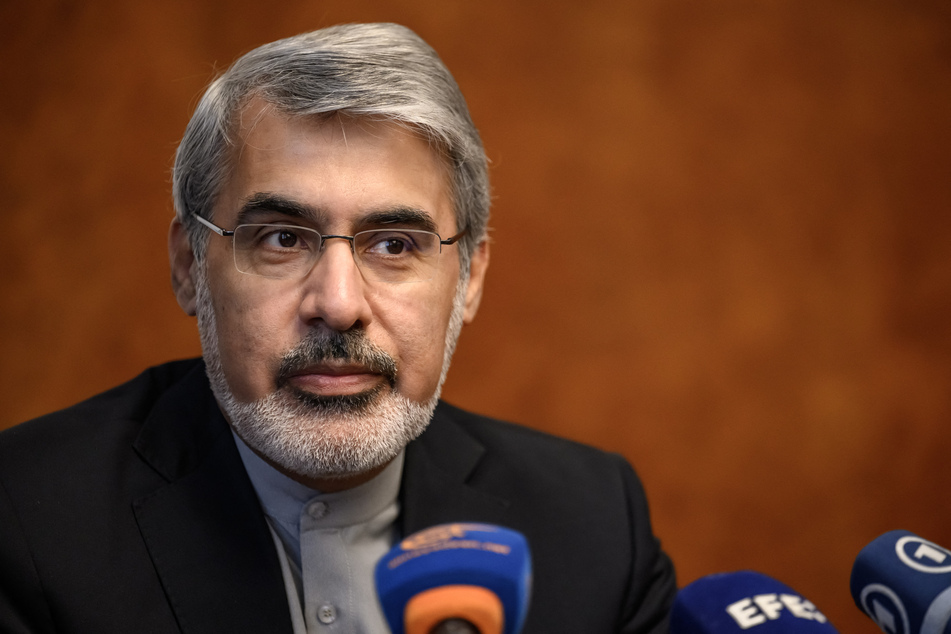
Iran's UN ambassador Ali Bahreini also told reporters Tuesday "there hasn't been such a decision" to allow IAEA inspectors into the country.
It came as Tehran's top negotiator said Tuesday that the strategic Strait of Hormuz wouldn't return to the days of free passage before the war, despite both sides agreeing Monday to set up communication lines to keep the vital trade route open.
"The Strait of Hormuz will never return to its pre-war conditions and will be administered by the Islamic Republic of Iran, in accordance with international law," Ghalibaf said on his return from the talks, according to IRNA.
Yet marine traffic through the waterway reached a record level on Monday since the war began, with at least 35 commodity carriers transiting it, according to maritime tracking firm Kpler.
Cover photo: FABRICE COFFRINI / AFP