Oakland, California - Elon Musk faced fiery questioning on Wednesday in his court showdown with OpenAI, as he insisted that the maker of ChatGPT had fooled him by turning an altruistic pursuit into a profit-making juggernaut.
His second day of testimony in federal court in Oakland, California, grew testy at times, as OpenAI's lawyers sought to portray the Tesla tycoon as an unreliable narrator of the company's history.
Musk, who helped co-found OpenAI in 2015 with Sam Altman and other Silicon Valley figures, has called for it to be forced to revert to a pure nonprofit.
He is also seeking the ousting of Altman and company president Greg Brockman.
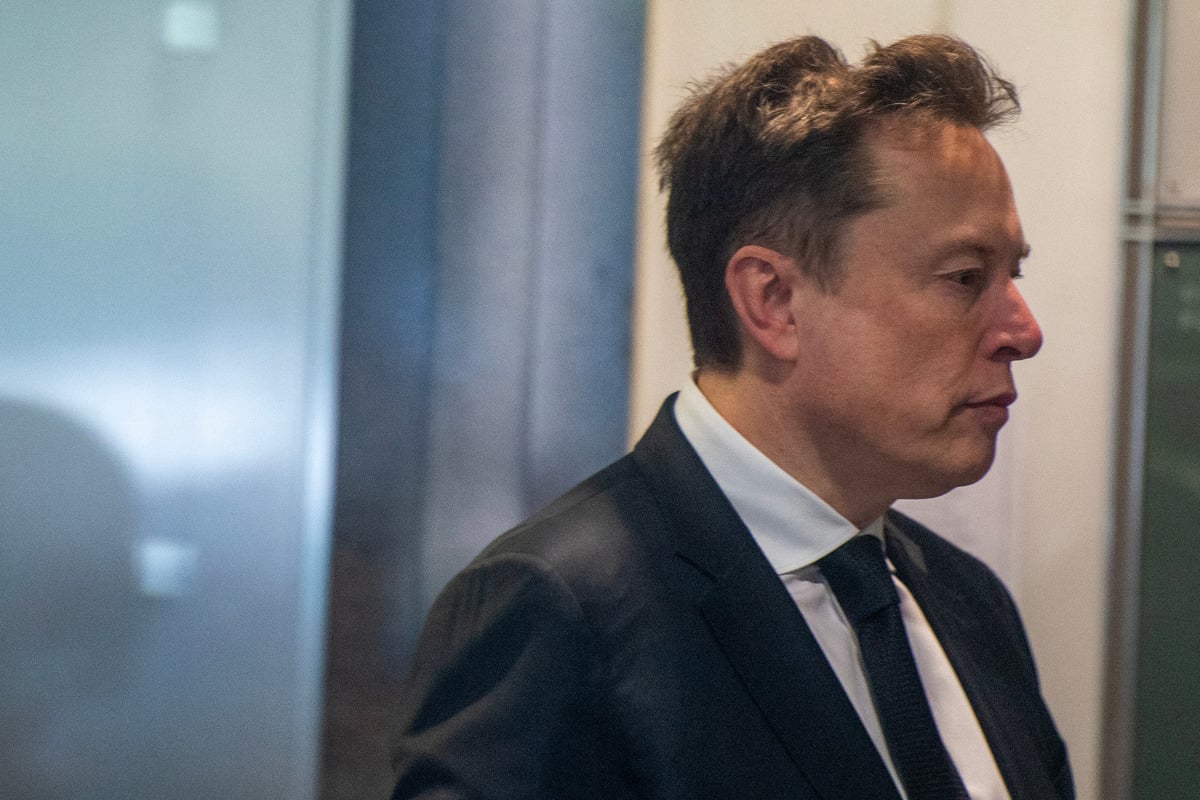
"Your questions are not simple. They're designed to trick me essentially," Musk complained to OpenAI's lead attorney William Savitt.
"Mr. Musk, you're a bright guy. I'm asking you questions that mostly have a yes or no answer," Savitt shot back.
The cross-examination sought to dismantle the narrative Musk had built during questioning from his own attorney.
In hours of testimony, Musk – who left the project in 2018 – insisted he was blindsided by OpenAI's transformation into a major tech company with a for-profit arm that has made it one of the most valuable private companies in history.
"I gave them $38 million of essentially free funding, which they then used to create an $800 billion for-profit company. I literally was a fool," Musk told the court Wednesday, before cross-examination began.

Did Elon Musk really want a non-profit business model for OpenAI?
At the heart of the case is his accusation that OpenAI co-founder and CEO Sam Altman betrayed the company's original nonprofit mission.
But on Wednesday, OpenAI's counsel used old emails to show that Musk himself, at various points, had questioned whether a nonprofit was the right model as he and the OpenAI leadership explored other corporate structures.
"You didn't respond that creating a for-profit would break any promise to you, did you?"

"No, as long as the for-profit is in service to the nonprofit, it is not breaking the promise."
On the stand on Tuesday, Musk traced his motivation to help launch OpenAI to a deep distrust of Google, which he believed did not take AI safety seriously and could not be trusted to responsibly develop such powerful technology.
He told the court he backed the project on the understanding it would be a nonprofit that would put society's interests first, with any technology it developed released as open source, freely available to all.
Since Musk's exit, OpenAI has become an AI superpower valued at $852 billion, buoyed by its ChatGPT chatbot, and is preparing for a high-profile IPO.
Musk has since launched his own AI lab, xAI, which he merged into SpaceX in February. The rocket company is valued at $1.25 trillion, and its IPO – expected in June – could rank among the largest in history.
Judge Yvonne Gonzalez Rogers will decide by late May whether OpenAI broke its promise to Musk.
Along with seeking to force OpenAI back to a nonprofit structure and oust Altman and Brockman, Musk has sought as much as $134 billion in damages – which he has pledged to redirect to the OpenAI nonprofit.