


New York state legislature passes one-year data center moratorium
Albany, New York - New York's state legislature passed a bill Thursday night that would prevent permits from being issued for the construction of new data centers for a year, potentially the first law of its kind in the US.
The bill now heads to the desk of New York Governor Kathy Hochul, who could sign it into law or veto the measure.
If Hochul signs the bill, New York would become the first state to impose a moratorium on data centers, which are critical infrastructure for AI companies whose programs rely on the facilities to operate.
The bill also says that once the moratorium period ends, every new data center application must be presented at a public meeting before the government can issue a permit.
The New York governor's office did not immediately respond to an AFP request for comment.
The passage of the legislation was confirmed to AFP by a spokesperson for New York State Senator Liz Krueger, who drafted a bill that would eventually be folded into the text passed Thursday.
A similar bill was passed in April in Maine, but Governor Janet Mills vetoed it on the grounds that it did not exempt a local data center project.
Public sentiment against data centers hardening
Public sentiment against data centers is hardening, with a Quinnipiac University poll earlier this year finding 65% of Americans oppose having a data center built in their community.
Data center construction spending has surged in recent years, with tech firms pouring tens of billions of dollars into building out infrastructure amid the race to lead in AI.
Critics of data centers point out the high electricity use of the facilities, putting strains on local grids and driving up energy bills, as well as their heavy water usage, noise generation, and relatively small number of jobs they create.
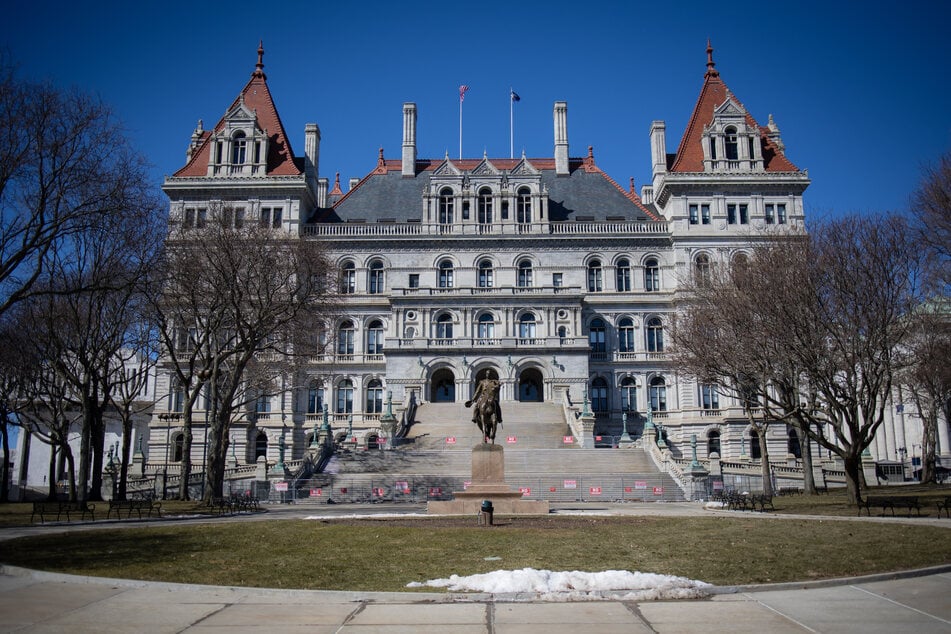
Cover photo: MATTHEW CAVANAUGH / GETTY IMAGES NORTH AMERICA / GETTY IMAGES VIA AFP