


Colombia earthquake: Death toll rises as many people feared trapped under rubble
Bogotá, Colombia - The death toll in the Colombian earthquake has risen to 169, authorities in the country said on Tuesday.
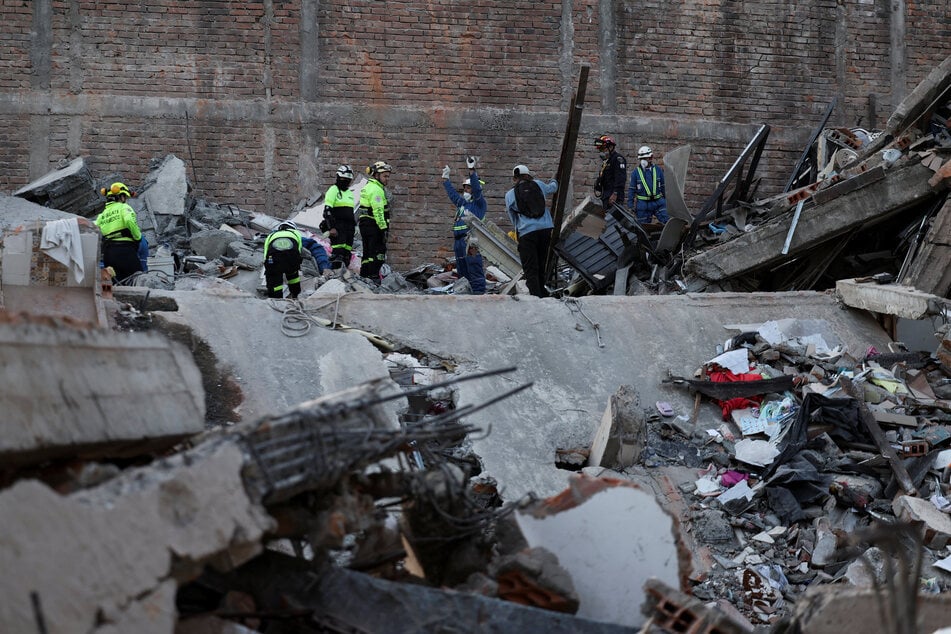
On Monday evening, newly sworn-in President Abelardo de la Espriella put the death toll at 111. Hundreds have been injured in the 7.4-magnitude quake, one of the strongest in decades. A state of emergency has been declared.
In the affected region in western Colombia around the epicenter near San José del Palmar, the quake caused numerous buildings either to collapse completely or to sustain damage. People are still believed to be trapped under the rubble.
In the city of Cali alone, which lies to the south, 188 people were reported missing, de la Espriella reported at an evening press conference at the scene. "This is where all our efforts will now be focused," he said.

In addition to Cali, the cities of Pereira and Manizales were also badly affected. Pereira alone had recorded 66 deaths according to the latest figures from the city administration, making it the city with the highest number of victims.
Eleven more people were reported missing, while 53 were believed to be trapped under the rubble, according to a post on the platform X. Fifty-eight buildings had completely collapsed.
De la Espriella put the death toll in Cali at 35, with around 700 people injured. Three hospitals and around 40 buildings had completely collapsed, he said.
Operations at the city's airport were also restricted. The government and local authorities had mobilized all available resources and were working together despite political differences, de la Espriella said.
The quake is the first major test for the right-wing politician backed by President Donald Trump. He visited several badly affected cities one after another.
"I thought we were going to die"
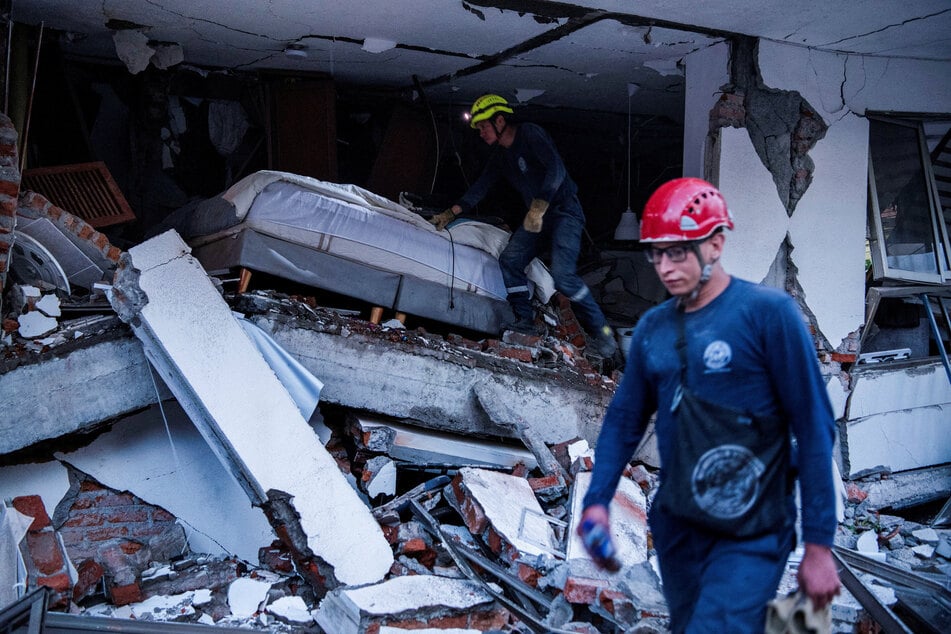
The earthquake occurred on Monday at 7:34 AM near San José del Palmar in the western region of Chocó, at a depth of around 64 miles.
Numerous aftershocks were subsequently recorded. The tremors were also felt in Bogotá, farther to the east, as well as in the cities of Medellín, Popayán, and Armenia. Reports said the earthquake was also felt in Ecuador, Venezuela, and Panama.
"At first I thought it was something minor. But when it kept getting stronger and wouldn't stop, I thought we were going to die," a woman from Manizales told broadcaster La FM.

"Part of the roof of my house collapsed, and the walls are cracked," said Juan Bernal from Armenia. In Bogotá, the tremors were clearly felt.
"We have a four-story building here that has completely collapsed. We have already managed to rescue three people alive," the acting fire chief in the La Alameda neighborhood of Cali told broadcaster Caracol.
The electricity supply as well as telephone and other communications networks have been disrupted. Six airports are currently closed to commercial air traffic due to damage to their infrastructure, according to the president. The cathedral in Manizales was also severely damaged.
On June 24, two quakes measuring 7.2 and 7.5 struck neighboring Venezuela within a matter of seconds. Thousands were killed.
Colombia's Geological Service said there was no connection between the events. The two quakes were caused by movements of different tectonic plates: In Venezuela, the Caribbean Plate was involved, while in Colombia it was the Nazca Plate, located off the Pacific coast.
The strongest quake previously recorded occurred in 1958 off the coast between Ecuador and Colombia, measuring 7.6. According to the Geological Service, only 15 people were killed. In 1999, however, more than 1,000 people were killed in the city of Armenia and nearby municipalities in a magnitude 6.1 quake.
Cover photo: REUTERS