


Trump defends Iran deal from critics he calls "fools" ahead of negotiations
Paris, France - President Donald Trump lashed out at critics of his agreement with Iran on Thursday, calling those who accused him of offering concessions to end the war "fools," ahead of negotiations in Switzerland on implementing the deal.
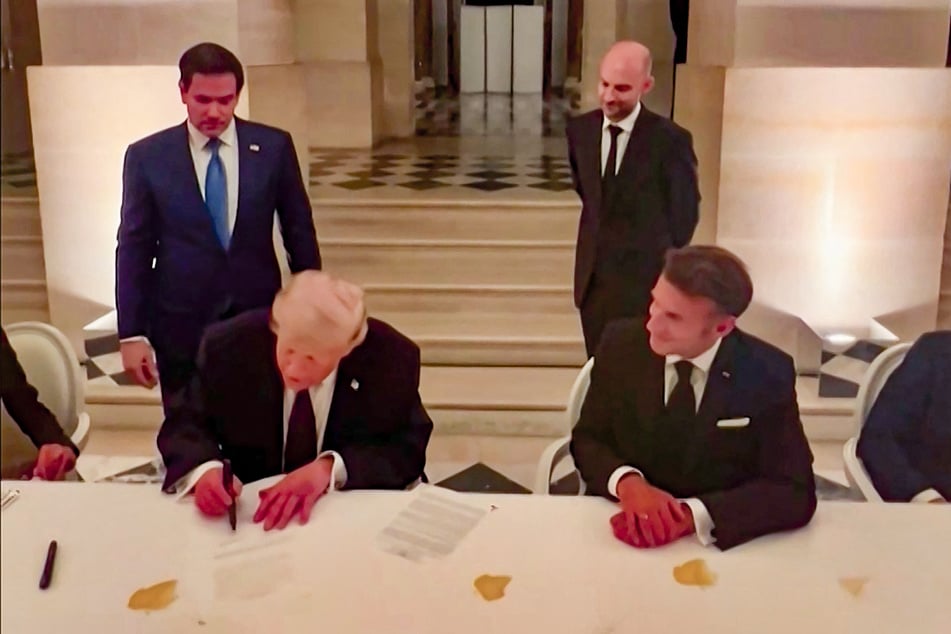
Oil prices tumbled after Trump and his Iranian counterpart separately signed their accord to end the Middle East war, with the Strait of Hormuz to reopen but two months of negotiations lying ahead.
In a sudden development after uncertainty over when the deal agreed earlier this week would be formally signed, Trump put his name to it in thick black ink at a candlelit dinner with French President Emmanuel Macron at the Palace of Versailles outside Paris on Wednesday.
Macron – for whom the signing at the palace, which hosted the signing of the treaty that ended World War I, was an immense coup following his hosting of the G7 summit – shouted "bravo" as Trump signed.

"These fools, who think I haven't been tough enough on Iran, when the Stock Market Just Hit A RECORD HIGH, and Oil prices are 'tumbling' down, are either jealous, bad people, or stupid," Trump posted on social media hours after signing the deal.
Iranian President Masoud Pezeshkian also signed the agreement, Iranian foreign ministry spokesperson Esmaeil Baqaei said, adding that "now it is time to test the implementation of the agreement."
Crude fell more than 3% Thursday, extending the losses sustained since news of the deal broke at the weekend.
Next steps in US-Iran peace agreement
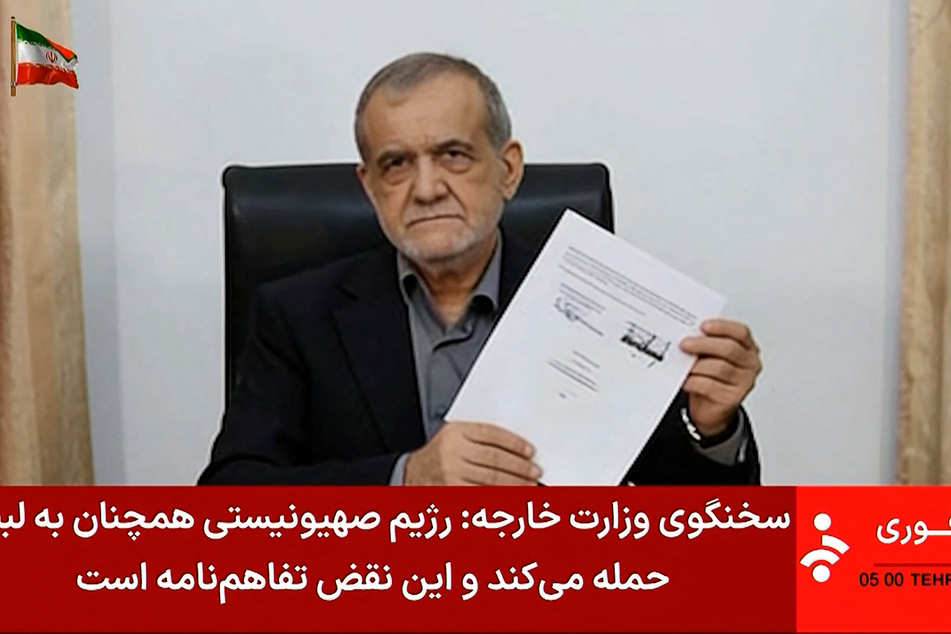
The deal should bring an end to the current US-Israeli conflict with the Islamic republic, which saw five weeks of all-out war until a ceasefire early April and led to shipping being greatly restricted in the Strait of Hormuz, causing a spike in energy prices.
Prime Minister Shehbaz Sharif of Pakistan, which helped mediate the agreement, said it "shall enter into force with immediate effect" and Iran "will instantly reopen the Strait of Hormuz." He also signed the accord.
A two-month negotiating period now begins with all eyes on the reopening of Hormuz and if progress can be made in talks over Iran's nuclear program, which Washington has long suspected of concealing secret bomb-making ambitions.
Macron hailed the deal "which allows for peace, the reopening of the Strait of Hormuz without tolls, and 60 days to conclude an agreement on nuclear, ballistic, and regional activities."
There remained confusion over the next steps, with the accord originally supposed to have been signed at an exclusive mountain-top resort in Switzerland on Friday by Iran's chief negotiator and parliament speaker, Mohammad Bagher Ghalibaf, and US Vice President JD Vance.
Baqaei said an in-person ceremony was no longer needed. But Sharif said an official ceremony will take place on Friday in Switzerland, and technical talks will commence.
Under the text, Washington commits to immediately waive oil sanctions crippling Iran's economy. And, once a final agreement is reached on Iran's nuclear program, the US will also facilitate the release of a $300 billion reconstruction fund supported by regional nations, the deal says.
UN atomic agency chief Rafael Grossi told reporters in Geneva it was ready to begin defining the "concrete steps" that will need to be taken to implement a US-Iran deal.
US officials also said Iran will dilute its enriched uranium stocks, possibly by "down-blending on site" under the supervision of the UN watchdog.
Iran's ballistic missile program was not mentioned in the agreement, despite Israel's longstanding push for its dismantling.
"Iranian missiles are only for firing, not for negotiations. Iran's defense capability will not be discussed in any way, in any process or with any party," Baqaei said.
Cover photo: Mandel NGAN / AFP