


Iran gives update on US peace talks and possibility of deal to end war
Tehran, Iran - Iran said Monday that Tehran and Washington had reached understandings on many issues in exchanges over a deal for ending the war, but warned an agreement was not imminent.

"It is correct to say that we have reached a conclusion on a large portion of the issues under discussion," foreign ministry spokesperson Esmaeil Baqaei said, during a weekly news briefing.
"But to say that this means the signing of an agreement is imminent – no one can make such a claim," he said, accusing Washington of "contradictions" and shifting its positions.
The remarks come after Iran said it was finalizing a 14-point framework for a deal on ending the war with the US which broke out on February 28.

US Secretary of State Marco Rubio said a deal to end the war with Iran could materialize on Monday as President Donald Trump said his negotiators not to "rush."
During the press conference, Baqaei insisted that the framework being drafted "is focused on ending the war" across the region, including in Lebanon.
He reiterated that details on Iran's nuclear program – a key sticking point for Washington – were not included and that the issue would only be discussed after the two sides agree on the framework.
Iran urges US to end naval blockade
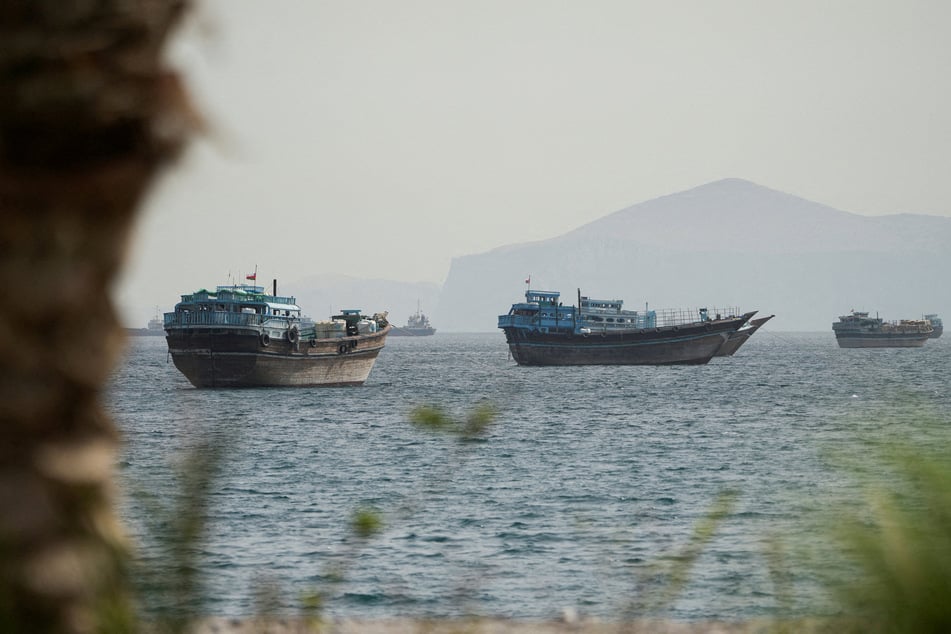
Clauses on ending the US naval blockade on Iranian ports, in place since April 13, and arrangements on the strategic Strait of Hormuz were included, he said.
"US actions under the title of a naval blockade must be stopped, and at the same time, the Islamic Republic of Iran will take the necessary measures for safe transit in the Strait of Hormuz," he said.
Traffic through Hormuz, a vital global shipping route, has come under Iranian control since the outbreak of the war.

Iran, which has only allowed a trickle of ships to pass through the strait, has insisted that vessels obtain permission from its armed forces before transiting the waterway.
Baqaei said Iran was not imposing tolls on ships transiting the strait but rather collecting fees for "navigational services."
"The services that are provided – navigational services in addition to the measures necessary to protect the environment of the Strait of Hormuz, the Persian Gulf and the Sea of Oman – require the collection of certain fees," he said, adding that Iran was "not seeking to collect tolls."
Cover photo: Majid Asgaripour/West Asia News Agency via REUTERS