

Here's how to watch the historic Artemis 2 moon mission
Washington DC - Hey there, space lovers! Want to check in on the Artemis 2 moon mission? Here are the best ways you can keep your eyes on the skies.
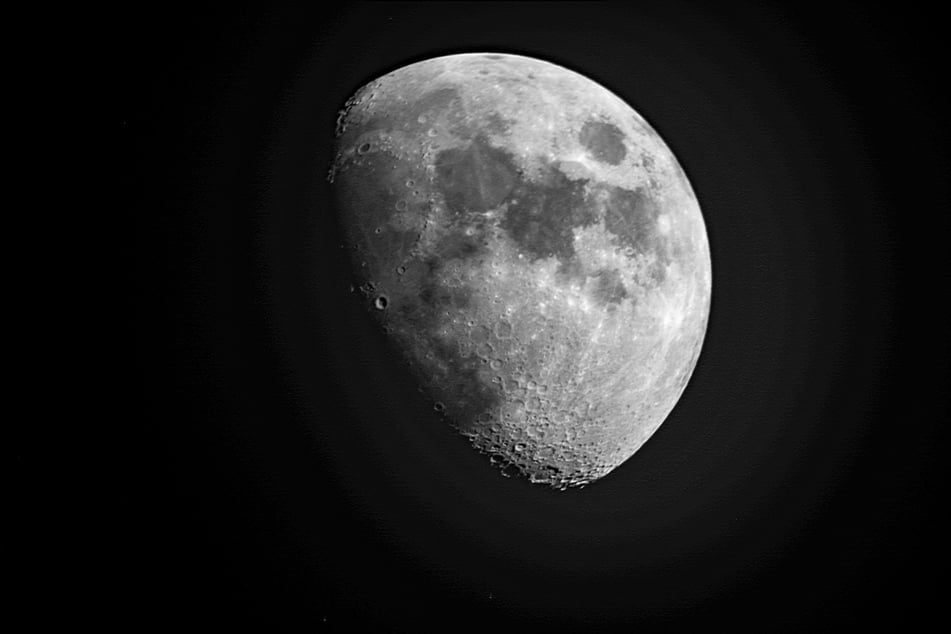
Four astronauts are on their way to a fly-by around the Moon, a major step towards the two-year plans to land astronauts on the Moon for the first time since 1972.
The highlight of the 10-day mission is set to come on Day 6, around April 6, when the spacecraft gets closest to the Moon and the crew become the first humans to see Mare Orientale (Eastern Sea).
The crew will then also witness a total solar eclipse, as the moon blocks both Earth and the Sun from view. NASA is making it easy to follow the journey Christina Koch, Victor Glover, Jeremy Hansen and Reid Wiseman are undertaking in their Orion spacecraft.
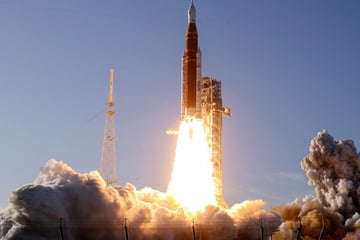
Anyone who wants to follow the Artemis 2 mission and its slingshot around the Moon can do so on NASA’s website and in the NASA app. The magic word is AROW (Artemis Real-time Orbit Website) and it is available to everyone.
At nasa.gov/missions/artemis-ii/arow/ you can track the mission in your browser. An up-to-date version of Firefox, Safari, Vivaldi or Chrome is recommended for this.
There, you can see a visualization of the Orion space capsule as if a camera were floating around it. The capsule can be viewed from all directions, with its position, speed, distance from Earth and distance from the Moon displayed.
If you switch to the mission view at the bottom left, you get the big picture: Earth, the Moon, the spacecraft, its course and its position.
At the end, there is still the landing, with a fiery re-entry into the atmosphere. Anyone who wants to read more information about the mission can visit the NASA blog.
It provides information on the origins, history, goals and followup missions.
You can also track Artemis 2 in the NASA app. For smartphones and tablets, the NASA app is a good option if you want to stay up to date on the Moon mission.
Right on the homepage there are maps, mission details, crew portraits and much more. The customized views work better on smaller displays.
The NASA app is available free for iPhone, iPad and Android.
The website of the European Space Agency (ESA) also provides a detailed overview of the mission and the technology used, some of which is European.
Cover photo: Unsplash/Michael & Diane Weidner