

Trump administration touts South Korea data center deal as win for global AI push
Washington DC - An Nvidia-backed US startup and a Korean conglomerate announced plans on Tuesday to build an artificial intelligence data center that will reportedly be the largest in South Korea.

The Trump administration hailed the deal as a win for its AI export program as it races against China for dominance in the fast-evolving sector.
New York startup Reflection AI and retail giant Shinsegae Group said their data center would have a massive energy capacity of 250 megawatts.
The Chosun Ilbo and other Korean news outlets said that would make it the country's largest data center running the AI systems that power chatbots, image generators, and similar tools.
The companies said the data center, equipped with servers from US titan Nvidia, would serve businesses across South Korea.
It will offer "fully sovereign frontier capabilities built and operated on home soil," said their announcement published early Tuesday Seoul time.
So-called sovereign AI has become a priority for many countries hoping to reduce dependence on foreign platforms while ensuring systems respect local regulations, including on data privacy.
US Under Secretary of State for Economic Affairs Jacob Helberg hailed the deal on X, saying that "the countries that will define the future of AI governance are the ones building the infrastructure now."
"America's job is to make sure our allies are building it with us," he wrote.
South Korea aims to become top AI power
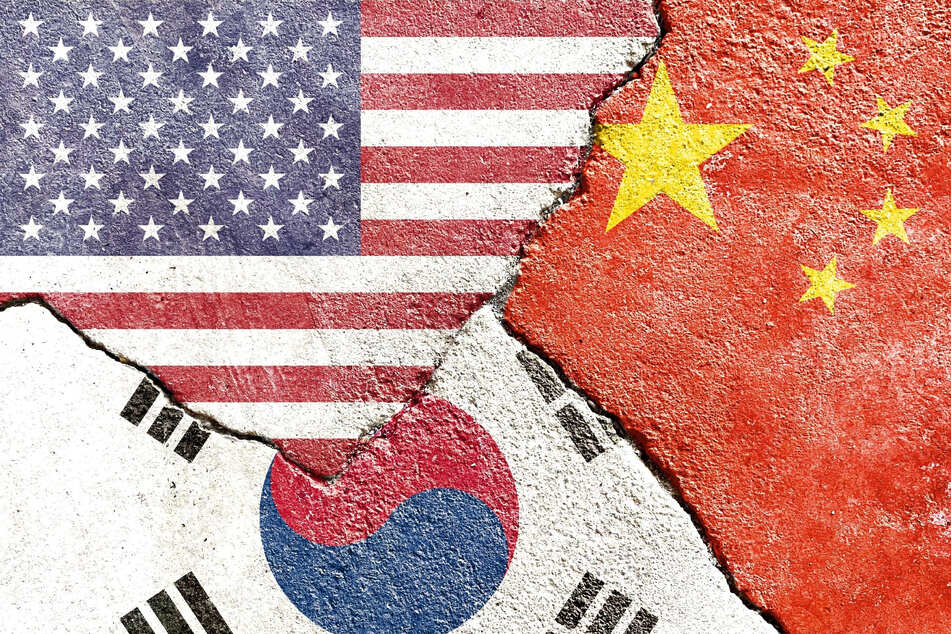
South Korea, home to major memory chip makers Samsung Electronics and SK hynix, has said it aims to join the US and China as one of the top three artificial intelligence powers.
"We're building AI infrastructure that the Republic of Korea can control, audit and evolve on its own terms," Reflection AI's CEO and co-founder Misha Laskin said.
Reflection AI, founded in 2024, is part of a collaboration led by Nvidia to advance frontier-level AI.
Reema Bhattacharya, head of Asia Research at risk intelligence company Verisk Maplecroft, told AFP that "from Washington's perspective, deals like this help strengthen partner ecosystems and reduce reliance on China."
But most Asian governments are not looking to be drawn into that binary, she said.
"In practice, that means you'll see countries quietly balancing US partnerships on their terms, while making strategic concessions to China to keep relationships stable."
Bhattacharya added that full AI self-sufficiency was "not a realistic goal for most Asian countries in the near term."
"What I'm seeing instead is a more pragmatic objective of reducing vulnerability in an ecosystem heavily shaped by US and Chinese dominance in models, chips, and talent."
Cover photo: JOSH EDELSON / AFP