

International crew finally blast off to space station after weather delay
Cape Canaveral, Florida - Four astronauts were on their way to the International Space Station Friday after they successfully embarked on their research mission to the orbiting laboratory.
The US space agency's international Crew-12 blasted off at approximately 5:15 AM local time (1015 GMT) aboard a SpaceX Falcon 9 rocket from the Cape Canaveral launch site in Florida, according to a NASA video feed.
The journey takes approximately 34 hours – the astronauts are expected to arrive at the ISS and dock by about 3:15 PM eastern time on Saturday.
They will replace a crew that returned from the station early due to a medical issue with one of its members.
The pre-dawn launch was delayed by two days over adverse weather forecasts across the US East Coast, including high winds that could have complicated any potential emergency maneuvers.
But superstitions aside, Friday the 13th proved to be their lucky day.
"I understand it's the first time NASA has ever launched on Friday the 13th," said Steve Stich, a NASA official who coordinates ISS launches, with a laugh. "Pretty amazing times."
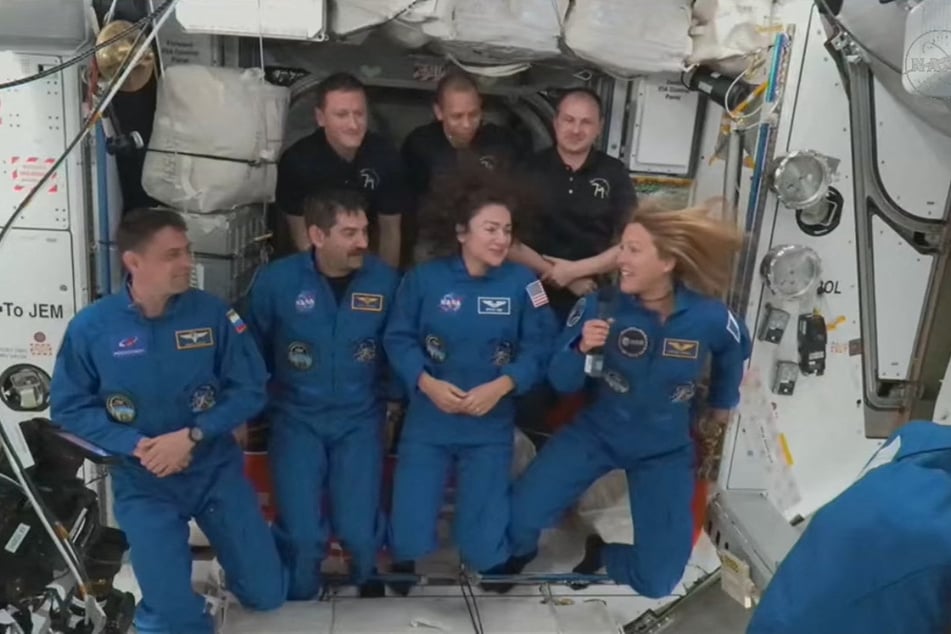
Crew-12 is composed of Americans Jessica Meir and Jack Hathaway, along with French astronaut Sophie Adenot and Russian cosmonaut Andrey Fedyaev.
"We have left the Earth, but the Earth has not left us," Meir said as the astronauts ventured into space. "When we gaze on our planet from above, it is immediately clear that everything is interconnected... We are one humankind."
The travelers are replacing Crew-11, which returned to Earth in January a month earlier than planned in the first medical evacuation in the space station's history.
The ISS, a scientific laboratory orbiting 250 miles above Earth, has since been staffed by a skeleton crew of three.
NASA declined to disclose any details about the health issue that cut the previous mission short.
Once the astronauts arrive, they will be one of the last crews to live aboard the football field-sized space station.
Continuously inhabited for the last quarter-century, the aging ISS is scheduled to be pushed into Earth's orbit before crashing into an isolated spot in the Pacific Ocean in 2030.
Cover photo: Handout / NASA / AFP