


Cat resting on the heater? You should know these dangers
Cats love to relax on a warm radiator in the cold winter months – unfortunately, this is not entirely safe, as this cat guide explains.
The most important facts in brief:
- Danger from claw traps: Cats can get their claws caught in radiator covers and injure themselves.
- Risk of burns: Hot radiators can burn the cat's paws.
- Dry air: Heated air leads to dry mucous membranes and can cause breathing problems.
- Protective measures: Offer alternative places to lie (such as cat hammocks), increase humidity, and use close-meshed protective grids.
Cat can get stuck in the heater
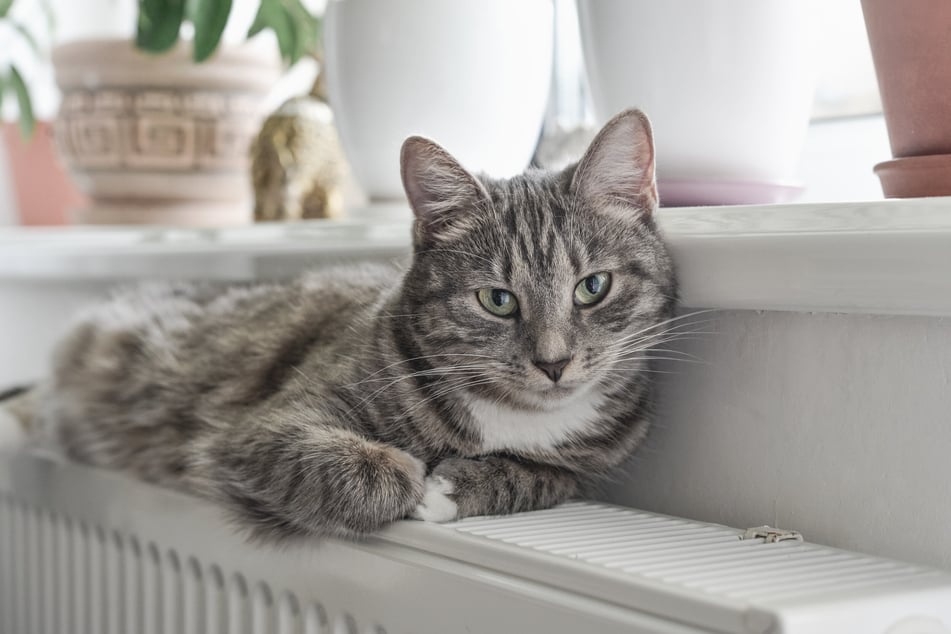
Many heaters are fitted with a narrow grille at the top, which actually serves as protection so that nothing can fall into the grooves.
However, heater covers in particular can be fatal for cats, as they can get their paws caught in them if the cat jumps down from the heater.
This can result in very painful injuries.
No grille is not a solution either: if there is no protection on the heat source and the kitty slips off or gets caught between the heating ribs, it can also seriously injure itself.
Cats can burn their paws on the heater
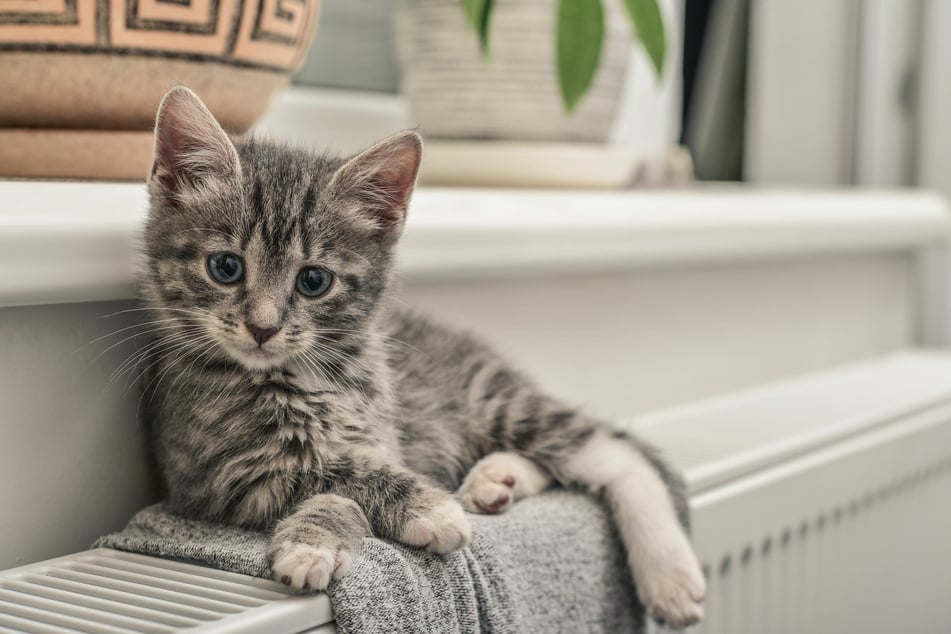
Another problem is that cats can burn their paws, which fortunately rarely happens, but can occur if the heating is set very high in the depths of winter.
If you have just turned the heating on, the cat will lie down on the heater shortly afterwards, but then the radiator then gets extremely hot within a short space of time.
Dry heated air makes cats' noses dry
Heating air can cause respiratory problems or colds in cats.
In addition to regular ventilation you should therefore ensure there is sufficient humidity indoors.
Cat is always lying on the radiator: how can I protect it?
The following alternatives and tips will prevent your cat from lying on the heater or getting a dry nose in winter.
Offer an alternative:
As it is difficult to break the habit with some stubborn four-legged friends, an alternative can help – for example, a cat lounger or cat hammock that you can simply hang near the heater.
This will keep your furry friend cosy and warm and prevent them from having to lie down on the hard, uncomfortable heater. A blanket on the heater may provide sufficient protection against burns, but it can slip off, as mentioned above, and thus pose a further risk.
Increase humidity:
Tips for more humid air in winter:
1st tip: Set up a humidifier.
2nd tip: Place a bowl of water on the radiator.
3rd tip: Don't put the washing in the tumble dryer, but hang it up in the living room.
Extra protection for the cat on the heater
You can also buy a cat guard for the heater; these are much more closely meshed than conventional heater covers, so that the cat's claws cannot get stuck.
Cover photo: 123RF/tashka2000