

Scientists say that this new finding could be why we haven't received any alien signals from space yet
California - A new study by alien searchers at the SETI Institute (Search for Extraterrestrial Intelligence) could explain why humanity has not yet received any alien messages from the depths of space.
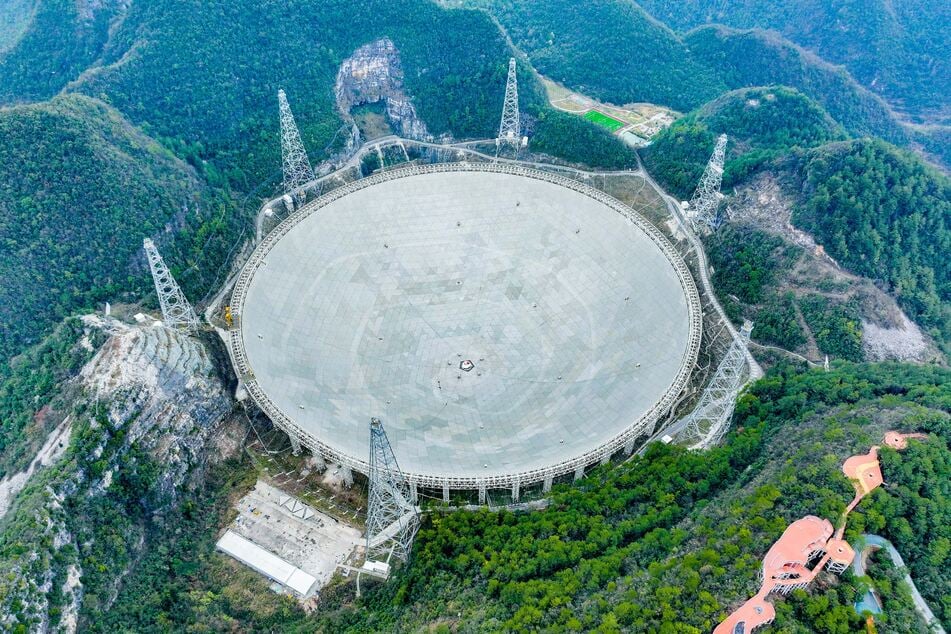
Since it was founded in 1984, the SETI Institute has been searching for signs of life in space, with scientists using huge radio telescopes to look for signals of extraterrestrial origin.
However, apart from the famous "WOW!" signal – which was registered by an observatory in Ohio on August 15, 1977 – the list of promising alien signals is quite short. But that might change soon!
As SETI announced this week, so-called "space weather" can make it so difficult to detect signals of extraterrestrial origin that we are unable to recognize them as such.
"SETI searches are often optimized for extremely narrow signals," explained SETI astronomer Dr. Vishal Gajjar.
"If a signal gets broadened by its own star’s environment, it can slip below our detection thresholds, even if it’s there, potentially helping explain some of the radio silence we’ve seen in technosignature searches."
Radio signals are distorted by space weather, SETI reveals

The scientist is referring to a distortion of the radio signals, which leave their home star as a narrow signal.
They are then distributed and spread over several frequencies due to plasma turbulence or solar winds on their way through space.
Since here on Earth we usually only look for extremely sharp frequency peaks as signs of extraterrestrial radio signals, it is possible that the alien signal could be lost in the background noise.
In order to better recognize such distorted signals in future searches, SETI studied the radio transmissions of spacecraft in our solar system, observing how the signals from our probes, satellites, and such are enhanced by the effects of space weather.
With these results, the search for signals from space could in the future be better aligned with "what actually arrives at Earth," explained Grayce C. Brown, co-author of the SETI study.
Cover photo: Bildmontage: NASA, ESA, CSA, and STScI/dpa, Ou Dongqu/XinHua/dpa