

China takes note of US "clarifications" on possible Trump summit delay amid Iran war
Beijing, China - China said on Tuesday it had "noted" clarifications from the US about the reasons for a possible delay to President Donald Trump's planned trip.
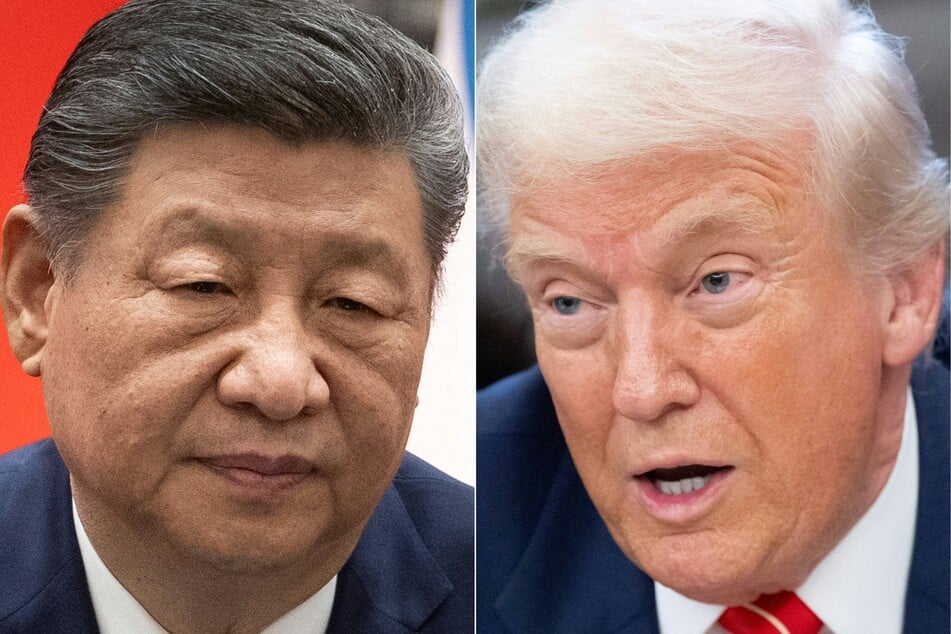
Trump expected to visit Beijing at the end of March, but said on Monday he had asked Beijing to delay his summit with Chinese leader Xi Jinping by around a month due to the war in the Middle East.
"Because of the war I want to be here. I have to be here, I feel. And so we've requested that we delay it a month or so," Trump told reporters at the White House when asked about the China trip.
Trump insisted that he maintained a "very good relationship" with China and was not trying to play games by postponing the highly anticipated trip to the rival superpower.
Previously, Trump suggested his visit could depend on whether China helped Washington to reopen the Strait of Hormuz, the vital maritime waterway that has been effectively closed by Iran in retaliation for US and Israeli strikes.
But China acknowledged Trump's request on Tuesday, in a statement rejecting any connection to the issues surrounding Hormuz.
"We have noted that the US side has publicly clarified these false reports by the media, stating that the relevant reports are completely wrong, and emphasized that the visit has nothing to do with the issue of the open navigation of the Strait of Hormuz," Chinese foreign ministry spokesperson Lin Jian said during a news briefing on Tuesday.
"Both China and the US are maintaining communications on Trump's visit to China," he said, without providing further details.
US Treasury Secretary Scott Bessent also said on Monday that meeting to Trump's demand for China to help reopen the waterway was a "false narrative."
About a fifth of global oil supplies normally pass through the Strait of Hormuz, and its closure has sent oil prices soaring above $100 a barrel.
US-China trade talks
Washington has said Trump would visit China from March 31 to April 2 to reset ties and extend a US-China trade truce, although Beijing had not confirmed those dates, in line with its usual practice.
On Monday, both countries hailed "constructive" trade talks between Bessent and Chinese Vice Premier He Lifeng in Paris over the weekend that were widely seen as setting the stage for the summit.
Bessent told journalists discussions "show the stability of the relationship," while He said the exchange would inject "greater certainty" into bilateral trade ties.
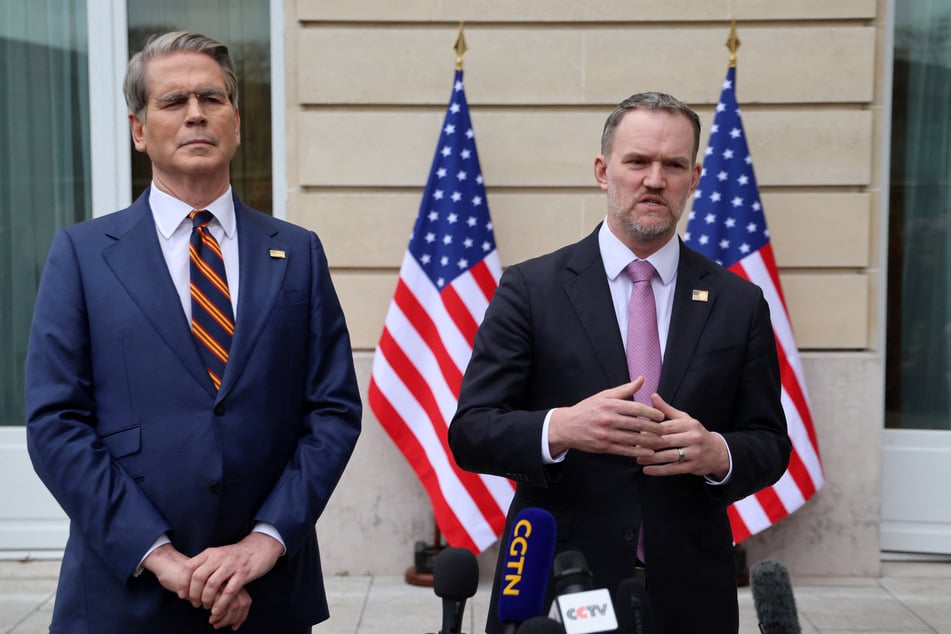
Also at the talks were US trade envoy Jamieson Greer and Chinese trade negotiator Li Chenggang.
Officials also discussed creating a "US-China Board of Trade," Greer said. This would help formalize and identify what the US should be importing from and exporting to China, he added, to ensure "we can focus on areas of mutual benefit."
However, the Paris talks follow a turbulent year in ties between the world's two largest economies since Trump returned to power.
The US announced new trade investigations last week on excess industrial capacity and forced labor, targeting 60 economies, including China and other key partners.
The prospect has fueled the possibility of further tariffs after the Supreme Court struck down Trump's global duties.
Beijing has said it "lodged representations" and urged Washington to "correct its erroneous" trade practices.
Cover photo: JESSICA LEE / VARIOUS SOURCES / AFP