

Canada urges G7 countries to go against the US and "collectively" push for Iran deescalation
Cernay-la-Ville, France - Ahead of a meeting in France, Canada's Foreign Ministry on Thursday said the G7 should collectively back a deescalation of President Donald Trump's war with Iran.
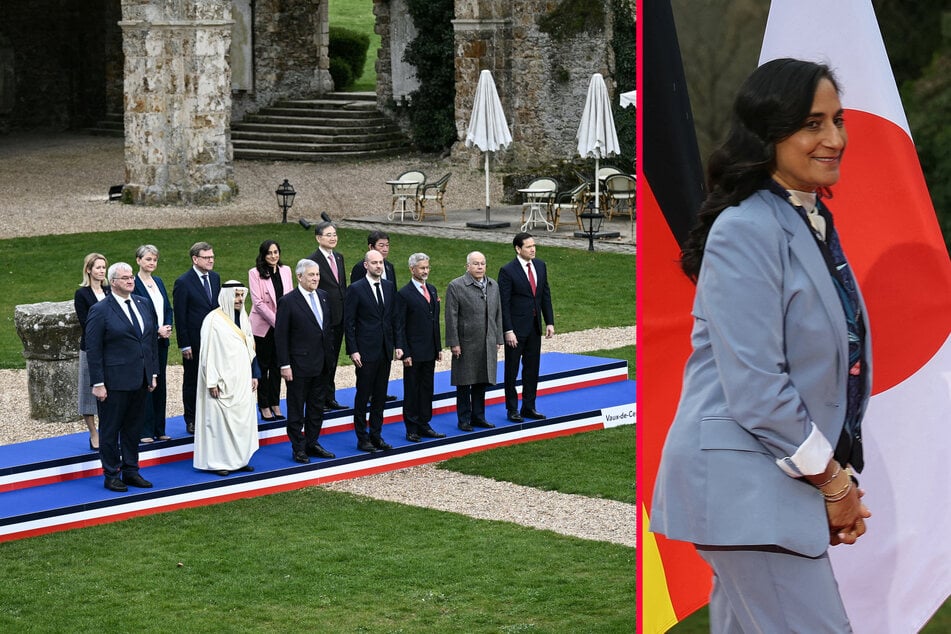
Canadian Foreign Minister Anita Anand said in an interview with the AFP that she had spoken to all affected countries in the region and all G7 members to urge deescalation and push for an end to the war.
Anand said that she had gone to lengths "to ensure that we are all collectively advocating for deescalation and for the opening of the Strait of Hormuz and for a path forwards for the Iranian people that preserves their lives."
"We must continue to use diplomatic channels to be sure there is a common view not just for a deescalation but to mitigate the economic shock," Anand said, pointing to "problems in the global provisioning chain."

In retaliation against relentless bombardments from the US and Israel, which have left thousands of civilians dead and Tehran in flames, Iran has effectively closed the Strait of Hormuz, a crucial trade waterway.
The closure has sent energy prices skyrocketing across the globe, as oil reached more than $100 a barrel.
Making his first trip abroad since the outbreak of war, Secretary of State Marco Rubio joined fellow top diplomats from Canada, Germany, Italy, France, Japan, and the United Kingdom for the G7 meeting in France.
While there will be no final joint communique at the end of the meeting, the gathering is likely to focus on the conflict in the Middle East, and the G7 presidency is expected to issue a statement at its conclusion.
"For Canada it's very important to have a deescalation, an opening of the Strait of Hormuz, and to continue to avoid the loss of civilian lives," Anand said. "That is the objective of Canada here."
Cover photo: Collage: AFP/Brendan Smialowski/POOL & AFP/Alain Jocard